Weather's Role in Shaping Exotic Wager Structures Across Harness Racing Circuits
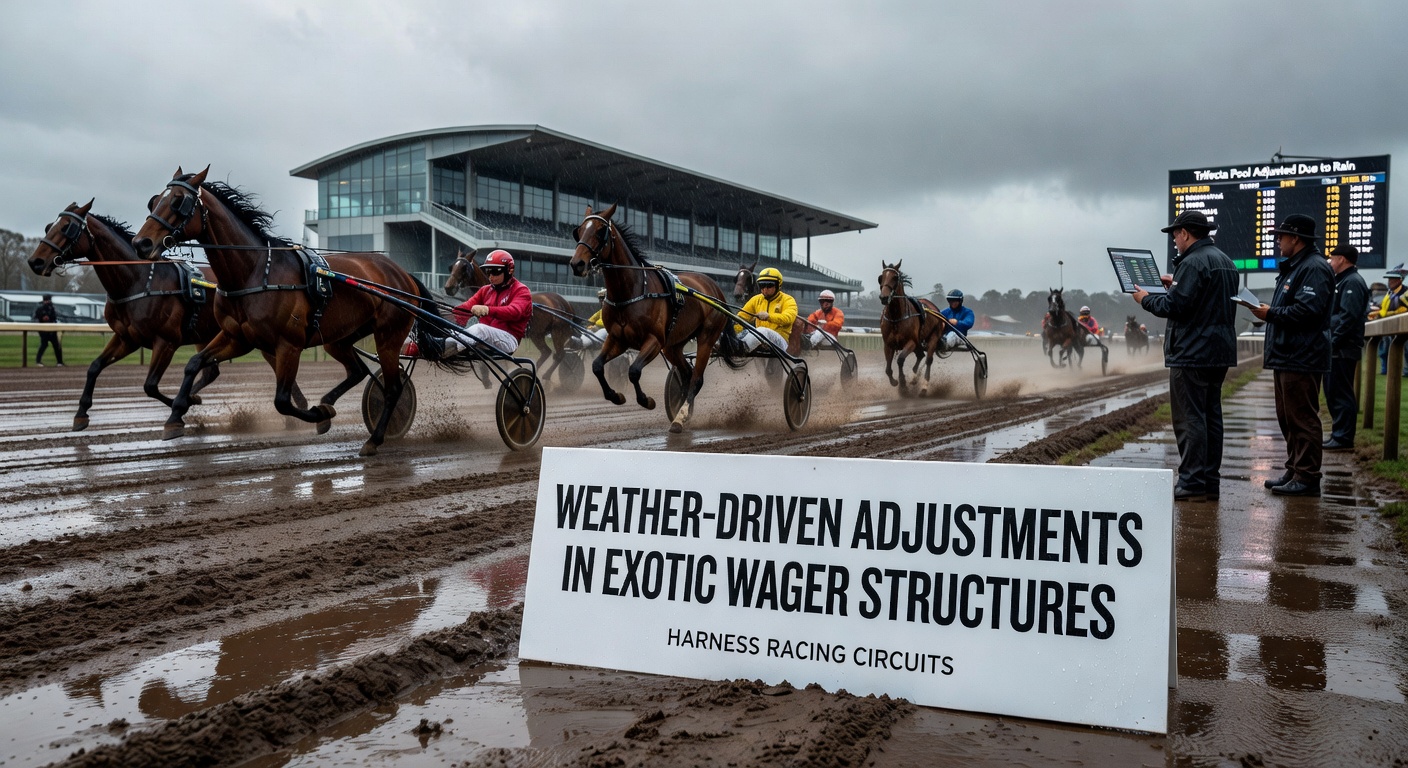
Harness racing circuits adjust exotic wager structures when weather alters track surfaces and horse performance patterns, while data from multiple regions shows how rain, temperature swings, and wind influence exacta, trifecta, and superfecta pools. Officials at tracks in North America, Australia, and Europe monitor these variables closely because precipitation changes footing, which shifts speed ratings and affects the probability distributions that determine payout calculations.
Tracks equipped with advanced sensors record moisture content every fifteen minutes during race days, and these readings feed directly into algorithms that recalibrate exotic bet minimums and pool caps. In regions where harness racing operates year-round, such as parts of Canada and the northern United States, winter conditions often force reductions in superfecta carryover thresholds because frozen or slushy surfaces increase the likelihood of unexpected finishes.
Track Condition Metrics and Pool Recalibration
Moisture levels above four percent typically trigger a shift from fast to good or sloppy designations, and racing secretaries respond by expanding the number of horses required for certain exotic tickets to maintain handle volume. Researchers at the University of Guelph documented these adjustments across Ontario circuits and found that trifecta pools grew by an average of eighteen percent on days when officials lowered the base bet from two dollars to one dollar in response to heavy rain. Those same studies noted that exacta payouts widened because public bettors concentrated wagers on early speed horses that performed better on wet surfaces, which altered the distribution of winning combinations.
Wind speed measurements also enter the equation, since gusts above twenty kilometers per hour can disrupt pacing strategies and increase the frequency of breaks. Circuit operators in Australia incorporate Bureau of Meteorology forecasts into their morning line calculations, and this practice allows them to publish adjusted exotic structures before betting windows open. When forecasts predict sustained crosswinds, tracks sometimes introduce new multi-leg wagers that include a consolation payoff for horses that finish despite weather-related setbacks.
Regional Approaches to Weather-Linked Betting Changes
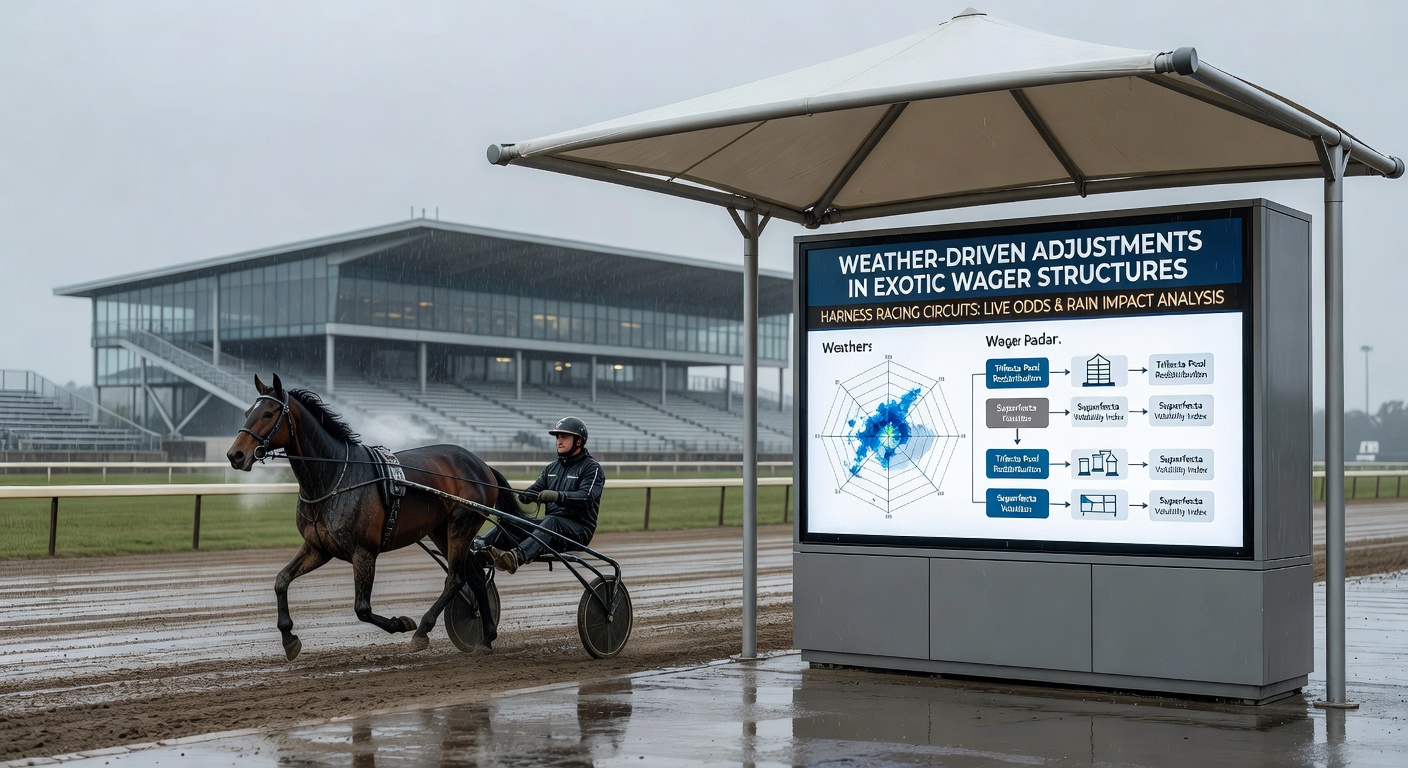
European harness circuits, particularly in Sweden and France, apply different protocols because their tracks often feature artificial lighting and enclosed grandstands that buffer some weather effects. Yet even there, heavy snowfall prompts the introduction of limited exotic options that exclude long-shot combinations until surfaces stabilize. Data released in May 2026 by the European Trotting Union highlighted a twelve percent drop in superfecta handle during prolonged cold spells, which led several circuits to experiment with weather-contingent carryover rules that roll unused pools into subsequent meetings rather than forcing immediate distribution.
North American tracks follow guidelines from the United States Trotting Association that encourage real-time communication between stewards and tote operators when conditions deteriorate. One documented case involved a Midwest circuit that reduced the leg count on its featured Pick-4 exotic from four to three races after steady rain made the surface unpredictable, and this change preserved overall betting volume while protecting the integrity of the remaining pools. Observers note that such decisions rely on historical performance data segmented by surface condition rather than subjective judgment alone.
Data Integration and Future Adjustments
Modern tote systems now integrate live weather feeds with past performance databases, allowing exotic wager structures to update dynamically as conditions evolve. A 2025 industry report from Harness Racing Australia described how algorithms flagged potential over-concentration in certain combinations during forecast rain events and automatically suggested alternative multi-leg options that spread risk across more outcomes. These systems reduce the chance of negative publicity from cancelled or heavily adjusted payouts because bettors receive clear notifications about structural changes before they commit funds.
Circuits continue to refine these processes by comparing results across similar weather events, and the patterns that emerge help officials set more precise thresholds for when exotic structures should shift. Temperature fluctuations around freezing remain especially challenging because they create variable ice formation that affects stride length and recovery times between heats.
Conclusion
Weather continues to drive measurable changes in how exotic wagers function on harness racing circuits worldwide, with data collection and regional protocols enabling consistent responses. Tracks that integrate meteorological information with performance analytics maintain stable handle levels even when surfaces change rapidly, and the ongoing development of dynamic pool structures reflects the practical need to balance bettor access with operational integrity across all conditions.