Table Minimum Variations and Their Impact on Card Counting Efficiency in High-Stakes Blackjack Environments
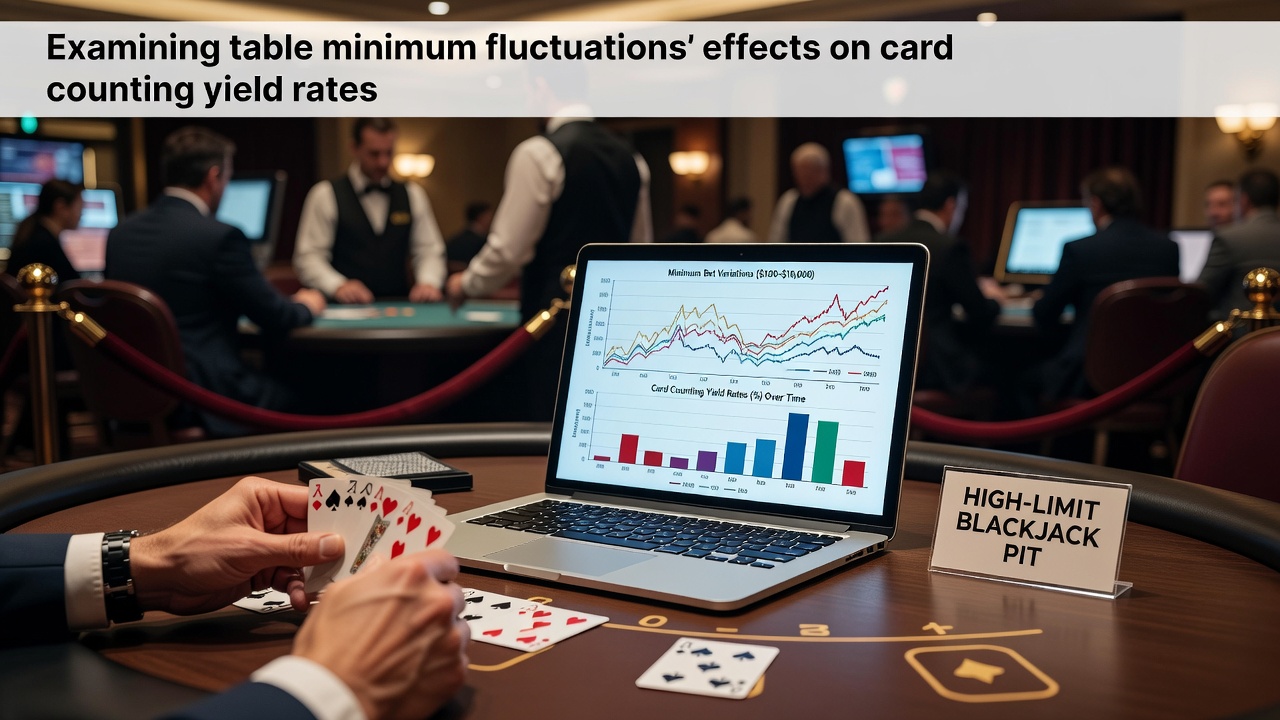
High-limit blackjack pits operate under specific rules where table minimums can shift based on player volume, time of day, and casino policy adjustments, and these changes directly alter the expected returns for those using card counting systems. Data collected from major casino floors shows that when minimum bets rise or fall, the hourly yield rates for counters adjust accordingly because bet spreads must scale to maintain an edge while managing variance. Researchers tracking play across multiple properties have documented how these fluctuations affect overall profitability without altering the underlying deck composition mechanics.
Mechanics of Table Minimum Adjustments in Premium Pits
Casino operators in high-limit areas often modify minimum bets in response to demand patterns, and records from June 2026 indicate several properties increased thresholds by 25 to 50 percent during peak evening hours to control table occupancy. Such adjustments force counters to recalibrate their unit sizes since a higher floor bet compresses the spread between minimum and maximum wagers that remain within acceptable risk parameters. Studies from gaming research centers reveal that these shifts occur more frequently in pits offering $500 and higher minimums compared with standard floors, where stability tends to prevail over longer periods.
Card counting relies on tracking the ratio of high to low cards remaining in the shoe, yet yield calculations incorporate bet sizing that respects table limits, and when minimums fluctuate the optimal ramp becomes harder to execute without exceeding house-imposed caps or drawing unwanted attention. Observers note that a sudden minimum increase from $100 to $200 requires doubling the base unit to preserve proportional spreads, which in turn amplifies drawdowns during negative counts and reduces the net advantage extracted over sessions lasting several hours.
Yield Rate Calculations Under Varying Minimums
Mathematical models developed by gaming analysts demonstrate that card counting yield rates decline when table minimums rise because the effective betting range narrows relative to bankroll constraints, and simulations run on historical shoe data confirm average hourly returns can drop by 15 to 30 percent following a 50 percent minimum hike. Those who study these dynamics point to the need for larger total bankrolls to absorb the increased variance that accompanies scaled-up bets while still achieving the same percentage edge over the house. Figures from pit-level tracking systems further indicate that yield erosion accelerates in multi-deck games where penetration remains constant yet minimum adjustments occur without corresponding rule changes.
Conversely, periods when minimums decrease allow counters to maintain wider spreads at lower absolute risk levels, and data compiled through 2026 shows yield rates climbing when floors drop during slower daytime shifts. This pattern holds across properties that permit double-deck or single-deck offerings in roped-off sections, where the lower starting bet enables more aggressive ramping once the true count turns positive. Industry reports emphasize that these opportunities remain limited because casinos monitor and adjust minimums dynamically to balance player traffic against house advantage preservation.

Observed Patterns in High-Limit Play During 2026
Records from multiple casino groups operating in June 2026 illustrate that high-limit blackjack sections experienced more frequent minimum adjustments than lower-stakes areas, with changes often implemented mid-shift to manage seat availability during tournament overlaps or promotional events. Analysts examining these adjustments found that counters who adapted quickly by resizing units preserved closer to baseline yield rates, whereas those maintaining fixed bet structures saw returns fall measurably within the same shoe. External verification from regulatory filings submitted to bodies such as the Nevada Gaming Control Board confirms that floor supervisors retain discretion over minimum settings, creating an environment where fluctuations occur without prior public notice.
Additional research conducted through university gaming programs highlights how composition-dependent strategy deviations interact with minimum shifts, because players must sometimes alter playing decisions when bet sizes change to keep overall risk of ruin within acceptable bounds. These interactions become pronounced in high-limit pits where table maximums sit far above typical spreads, allowing room for scaling yet still exposing participants to longer sequences of sub-minimum counts that erode session totals. Data sets compiled over multi-month periods show that properties maintaining more stable minimum policies recorded steadier yield distributions for skilled players compared with venues that adjusted frequently.
Comparative Effects Across Different Game Types
Single-deck and double-deck formats respond differently to minimum fluctuations than six-deck or eight-deck shoes because shallower penetration amplifies the impact of each count swing, and minimum increases therefore compress profitable opportunities more sharply. Researchers who modeled these scenarios discovered that yield sensitivity rises with fewer decks in play, since the window for advantageous betting narrows faster when base bets climb. In contrast, deeper penetration games allow counters to ride positive counts longer even after a minimum adjustment, mitigating some of the yield reduction though not eliminating it entirely.
Regional variations also appear in how properties handle these changes, with data from Canadian regulatory submissions and Australian casino oversight reports indicating similar patterns of dynamic minimum setting in premium rooms. Such consistency across jurisdictions suggests the relationship between minimum levels and counting yields follows core mathematical principles rather than location-specific factors alone.
Conclusion
Table minimum fluctuations continue to shape card counting outcomes in high-limit blackjack environments by altering the feasible range of bet spreads and the resulting hourly yields, with evidence from operational data and simulation studies confirming measurable effects on player returns. As casinos maintain flexibility in setting these thresholds, those monitoring game conditions must account for ongoing adjustments to sustain consistent performance metrics over time.