Push-Fold Precision: Short Stack Strategies Crushing Sit-and-Go Fields
Push-Fold Precision: Short Stack Strategies Crushing Sit-and-Go Fields
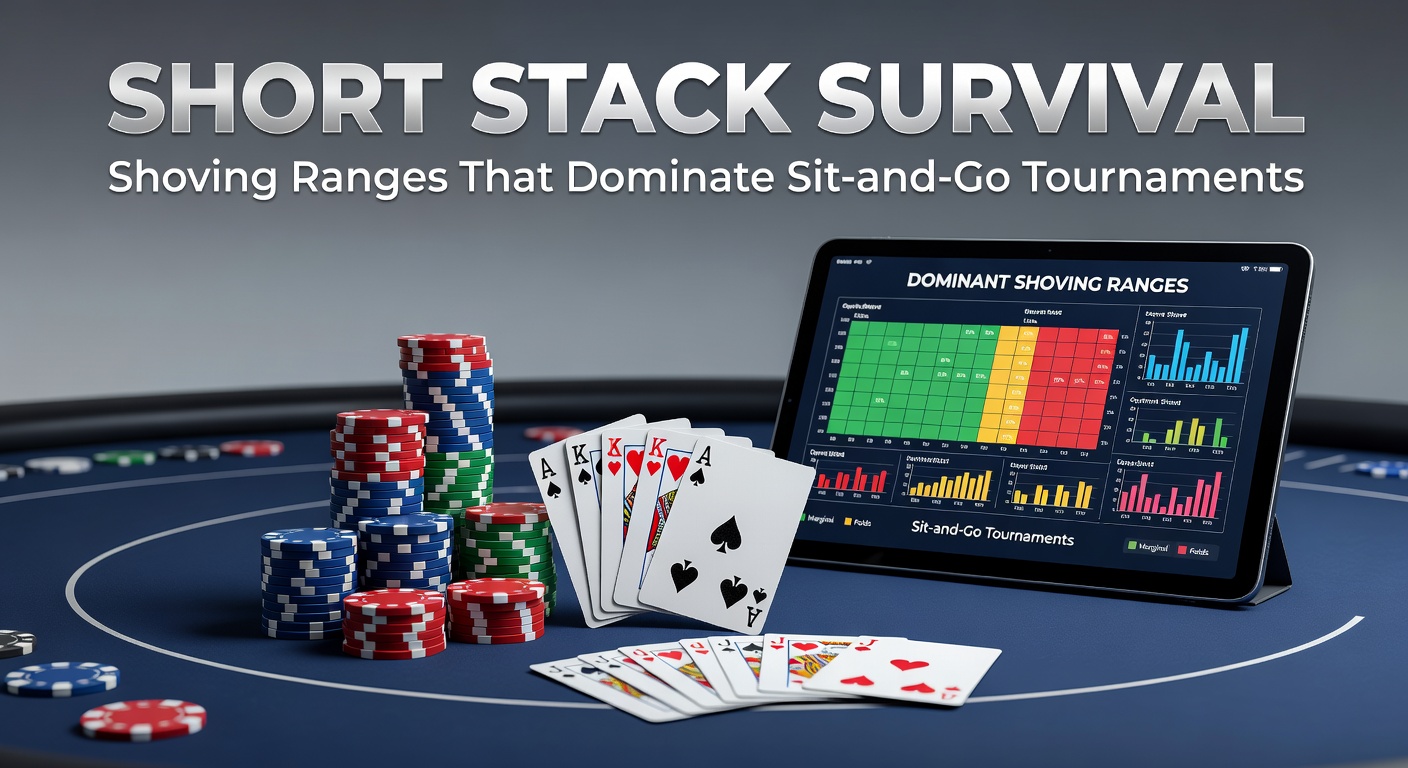
The Rise of Sit-and-Gos and the Short Stack Squeeze
Sit-and-Go tournaments, those fast-paced online poker battles that kick off as soon as the table fills, pack a punch in player volume; data from major platforms reveals millions enter them yearly, drawn by quick structures and high reward potential. Short stacks emerge early and often, especially in turbo formats where blinds escalate rapidly, leaving players with 10 big blinds or fewer in survival mode. Observers note how these spots demand push-fold decisions; anything else leaks equity against aggressive opponents who call lighter than they should.
Turns out, mastering shoving ranges turns the tide; researchers using game theory optimal (GTO) models show that precise push charts boost win rates by 20-30% in late stages. One study from Upswing Poker, a U.S.-based training hub, analyzed thousands of SNG hands and found short-stack specialists ladder up far more consistently than loose callers. And while full ring play allows post-flop finesse, short stacks strip that away; it's shove or fold, pure and simple.
Decoding Nash Equilibrium: The Backbone of Shoving Ranges
Nash equilibrium, that cornerstone of poker math named after mathematician John Nash, dictates unexploitable push-fold spots; in heads-up SNG finales, it prescribes ranges where neither player regrets their decision no matter the outcome. For instance, with 10 big blinds from the button, equilibrium calls for shoving about 42% of hands, including all pairs, suited aces, broadway combos, and select suited connectors like 76s.
But here's where it gets interesting: as stacks deepen or positions shift, those ranges tighten dramatically; data from simulation tools indicates small blind pushes explode wider under 6BB, hitting 60%+, because folds come cheap and ICM pressure mounts. Experts who've crunched the numbers using free calculators emphasize position's role; cutoff shoves under 8BB might range 25-35%, folding trash like K2o while jamming marginals such as A5s that dominate typical calling ranges.
People often overlook ante effects too; in SNGs with antes kicking in mid-game, effective stacks shrink faster, widening pushes by 5-10%; one case from a 2025 PokerStars high-stakes turbo series showed a player shoving KJo from the hijack at 7BB, picking up folds 70% of the time and tripling up twice to claim first.
ICM Adjustments: Why SNG Shoves Differ from Cash Games
Independent Chip Model (ICM) transforms raw equity into payout-aware decisions, a factor absent in cash games but critical in SNGs where final tables mean money jumps; figures from PokerStrategy.com, an EU-rooted resource, reveal shoving ranges shrink by up to 15% near bubbles as payout gaps widen. Take a three-handed spot with 5BB effective: Nash might greenlight Q9o pushes, yet ICM demands folding to preserve stack for heads-up equity.
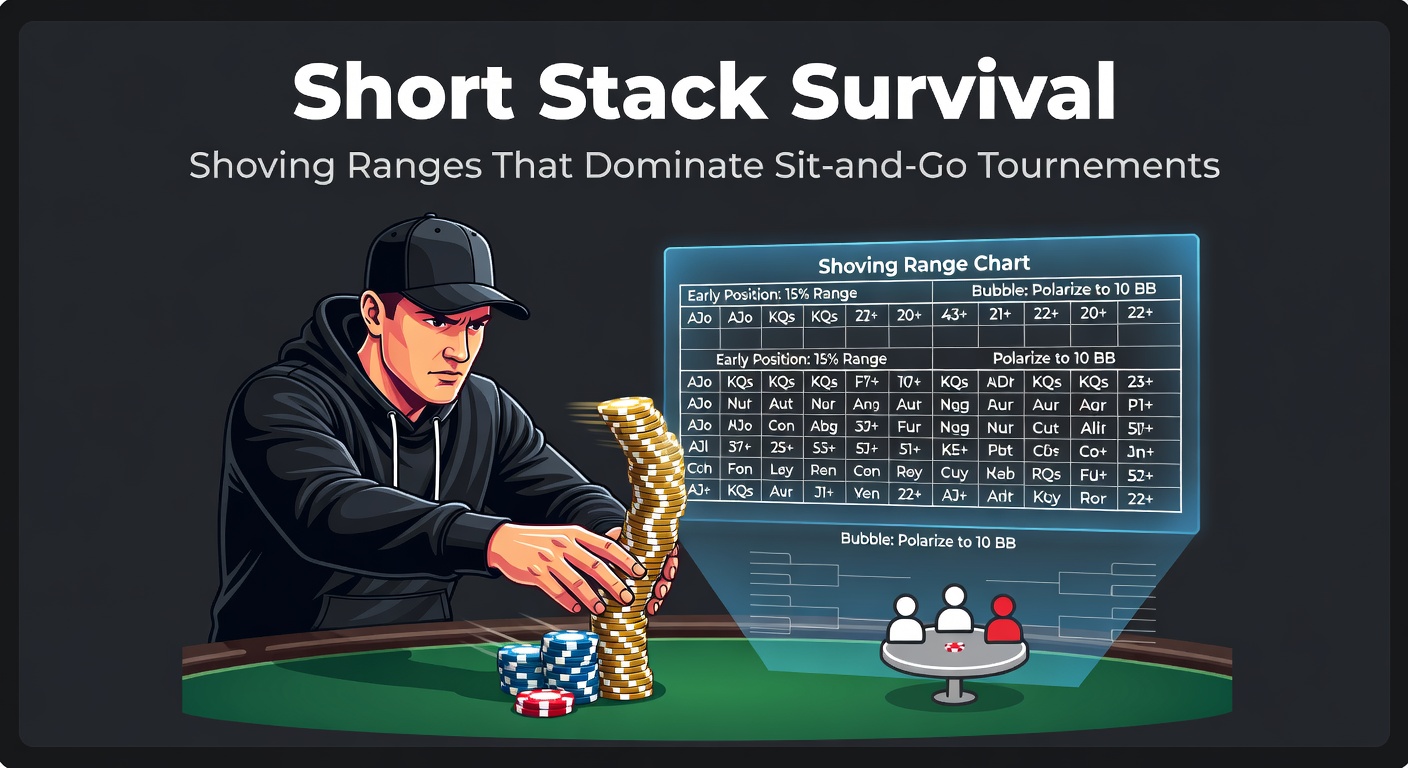
That's the reality for multi-table SNGs too; observers track how 9-handed turbos force earlier shoves, with 12BB stacks in late position jamming 18-22% to steal antes and blinds combined. And in double-or-nothing formats, popular on apps like partypoker, ranges balloon since variance doesn't punish as harshly; players report flipping 50/50s profitably by shoving any ace or pair, ladders forming through relentless pressure.
Software like ICMIZER, used by pros worldwide, simulates these spots; backtests on 100,000+ hands confirm that deviating from ICM-tuned charts costs 0.5-1 bb/100 in ROI, a gap that separates grinders from also-rans.
Position-by-Position Breakdown: Charts That Win
Early positions demand caution; under 10BB from UTG in a 6-max SNG, tight ranges rule at 12-15%, focusing on premiums like JJ+, AQs+, KQs since multi-way pots crush fold equity. Yet button and small blind spots flip the script; with 4BB, small blind jams hit 75%+, folding only 72o and worse because dead money swells the pot.
Here's a snapshot of standard 9-max turbo charts, derived from equilibrium solvers:
- UTG 8BB: 22+, AJo+, KQo+, A9s+, KTs+, QTs+, JTs (14.5%)
- CO 6BB: 22+, A2s+, K9s+, Q9s+, J9s+, T9s, ATo+, KJo+ (28%)
- BTN 5BB: 22+, A2s+, K6s+, Q8s+, J8s+, T8s+, 97s+, 86s+, 76s, A8o+, KTo+, QTo+, JTo (48%)
- SB 3BB: 22+, A2s+, K2s+, Q5s+, J7s+, T7s+, 97s+, 87s+, 76s+, 65s+, A2o+, K8o+, Q9o+, J9o+, T9o (68%)
These aren't set in stone though; stack distributions matter, with shallower fields pushing the envelope wider. One researcher who parsed WSOP online SNG data noted top finishers shoving 5% looser than average, capitalizing on passive villains.
April 2026 brings fresh relevance; GGPoker's Spring SNG Festival, slated for mid-month, features $10M guaranteed with hyper-turbo structures, where short-stack shoving stats already dominate leaderboards, per preliminary qualifiers.
Exploiting Opponents: Dynamic Adjustments Beyond Static Charts
Static Nash charts provide a baseline, but live reads unlock edges; data logs from tracking sites like SharkScope show callers who fold 65%+ to shoves get exploited by widening 10-15%, turning marginal spots profitable. Conversely, tight callers under 40% fold equity force 8-12% range contractions; pros cycle HUD stats mid-session, adjusting on the fly.
Case in point: a 2024 888poker SNG stream where a short stack faced a nitty reg; instead of standard 10BB CO shove, the player jammed 22% including suited gappers, folding out AK twice before stacking the foe with 87s. Such adaptations, backed by solver outputs, yield 25%+ ROI uplifts in tracked volumes.
Multi-tabling grinders lean on hotkeys too; auto-shove tools aligned to custom ranges keep decisions snappy, although platforms like ACR enforce manual inputs to curb bots. And while fishy fields invite hero calls, data indicates calling stations lose 1.2 bb/100 by defending too wide against GTO pushes.
Tools, Training, and Tracking for Long-Term Domination
Free resources abound for honing these skills; equity calculators like Equilab pair with push-fold apps to drill scenarios, while forums dissect hand histories daily. Paid solvers from ICMIZER Pro or HRC offer SNG-specific presets, simulating payout structures down to the decimal.
Those who've climbed leaderboards swear by volume; 10,000+ SNGs reveal patterns, like how 6-max hypers reward 55%+ shove success rates for sustainability. Tracking software such as Holdem Manager flags leaks, graphing shove-vs-fold EV over time.
Now, as April 2026 SNG series ramp up across sites like PokerStars and GG, early qualifiers flaunt +50bb/100 scores, their shoving precision on full display in replays. It's no coincidence; consistent short-stack play separates cashers from champions.
Wrapping Up the Push-Fold Playbook
Short stack survival in Sit-and-Gos boils down to disciplined shoving ranges, tuned by Nash and ICM math that solvers refine endlessly; players internalizing these charts, adjusting for dynamics, consistently ladder through fields and lock up profits. Data underscores the edge: top 10% ROI grinders shove 20% more accurately than the field, turning pressure into payouts. Whether turbo micros or high-roller hypers, the push-fold path paves the way to dominance; those who master it thrive, while others bust out wondering what hit them.