Multiplier Thresholds and Their Role in Video Slot Yield Modeling
Taylor Richter · Aug 24, 2026
Multiplier Thresholds and Their Role in Video Slot Yield Modeling
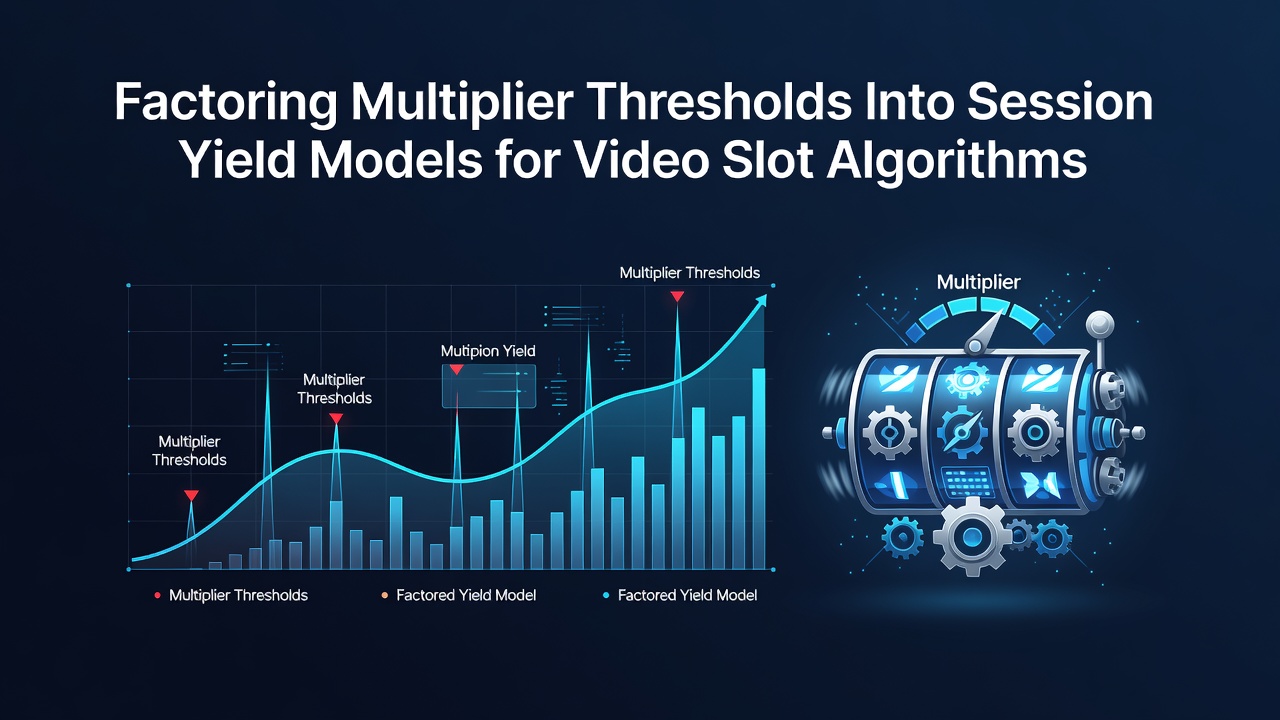
Video slot algorithms rely on precise session yield models that account for base game returns plus the layered impact of bonus multipliers, and researchers have developed specific methods to incorporate threshold points where those multipliers activate or escalate. Data from industry reports indicate that multipliers often follow stepped structures rather than continuous scaling, which means yield projections must adjust for discrete trigger values instead of average assumptions. Observers note that failing to isolate these thresholds leads to overstated or understated session outcomes, particularly in games where multipliers apply only after certain symbol combinations or feature entries occur.
Session yield itself represents the net return across a defined number of spins or play periods, and algorithms calculate this figure by combining hit frequency, average payout per hit, and the probability distribution of multiplier events. When thresholds enter the equation, the model segments the outcome space into zones below and above each activation point, then weights the expected value accordingly. Studies from gaming mathematics groups show that even small shifts in threshold positioning can alter projected yield by several percentage points over extended sessions, because higher multipliers contribute disproportionately to total return once they become available.
Defining Threshold Structures in Slot Mechanics
Multiplier thresholds appear in several common formats across video slots, including fixed symbol count requirements, progressive meter levels, and random feature triggers that unlock escalating values. Engineers design these points to create tension between frequent small returns and rarer large multipliers, and yield models must replicate that same segmentation to remain accurate. One common approach involves constructing cumulative distribution functions that map the probability of reaching each threshold during a session, then applying conditional payout multipliers only to the spins that satisfy the criteria.
Threshold modeling also requires attention to session length because shorter play periods show higher variance around the activation points, whereas longer sessions allow the law of large numbers to smooth results closer to theoretical expectations. Analysts at research institutions have documented cases where sessions under 500 spins produced yield deviations exceeding 15 percent solely due to threshold timing, while sessions beyond 5,000 spins converged more tightly around the adjusted mean. This pattern holds across multiple game titles regardless of jurisdiction.
Integration Methods Within Yield Algorithms
Modern yield models embed threshold logic through Monte Carlo simulation layers or closed-form adjustments to the base RTP calculation. In simulation-based systems, each trial spin evaluates the current state against defined thresholds before applying the appropriate multiplier branch, and aggregated results feed back into the overall session yield estimate. Closed-form methods instead derive modified payout tables that isolate the contribution of each threshold zone, then combine those weighted values with base game frequency data.
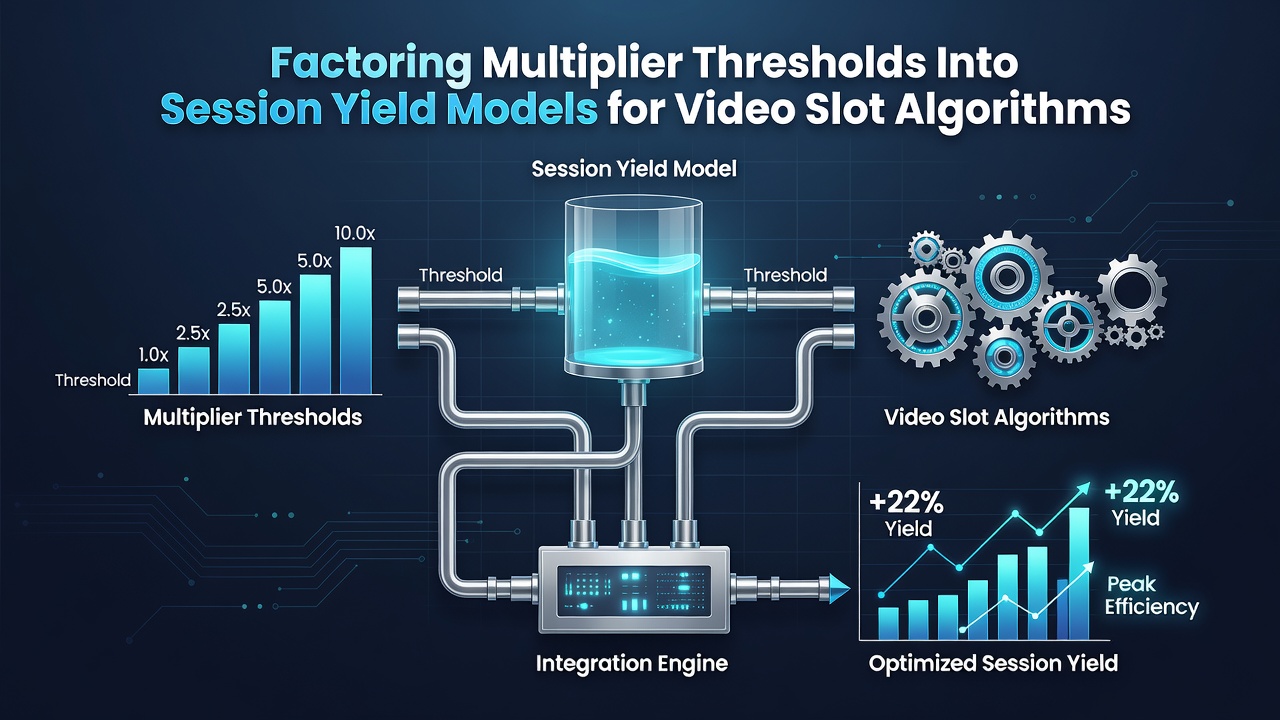
Both techniques demand accurate input data on threshold probabilities, which game developers derive from the underlying reel strips and feature code. Regulatory testing labs in various regions, including those overseen by the Nevada Gaming Control Board, verify these probabilities before approving titles for market release. When operators later adjust parameters such as denomination or feature frequency, the yield model must recalculate threshold contributions because even minor changes can shift activation rates enough to affect session projections.
Recent updates in August 2026 highlighted the growing use of real-time threshold tracking within operator analytics platforms, allowing dynamic recalibration of yield forecasts as player data accumulates. Industry organizations such as the American Gaming Association have published guidance on maintaining model accuracy when threshold mechanics interact with player-selectable options or progressive jackpot linkages.
Practical Considerations for Algorithm Implementation
Implementation teams must decide how granularly to segment multiplier thresholds within the yield model, balancing computational cost against precision gains. Coarse segmentation that groups several thresholds together can mask important inflection points, while overly fine segmentation increases processing time without proportional accuracy improvements once session length exceeds certain limits. Data from Canadian regulatory reviews and Australian academic papers on gaming mathematics both point to an optimal segmentation range of three to five discrete multiplier bands for most commercial video slots.
Another factor involves correlation between base game symbols and multiplier triggers, because independent assumption models produce incorrect yield estimates when thresholds depend on the same reel outcomes that generate base payouts. Advanced algorithms therefore incorporate joint probability matrices rather than multiplying marginal probabilities, and this adjustment becomes especially critical in games that feature cascading reels or expanding wild mechanics alongside multiplier ladders.
Those who maintain these models routinely compare projected yields against actual session results to identify drift caused by threshold mis-specification. When discrepancies exceed acceptable tolerances, the model receives recalibration using updated frequency tables drawn from game logs or certification documents.
Conclusion
Accurate incorporation of multiplier thresholds into session yield models requires segmented probability calculations, appropriate simulation or analytical methods, and ongoing validation against observed data. As video slot designs continue to introduce new threshold variations, the same core principles of conditional expectation and threshold-specific weighting remain central to reliable projections across different markets and regulatory environments.