Mapping Loyalty Tiers and Their Effects on Video Poker Hand Selection
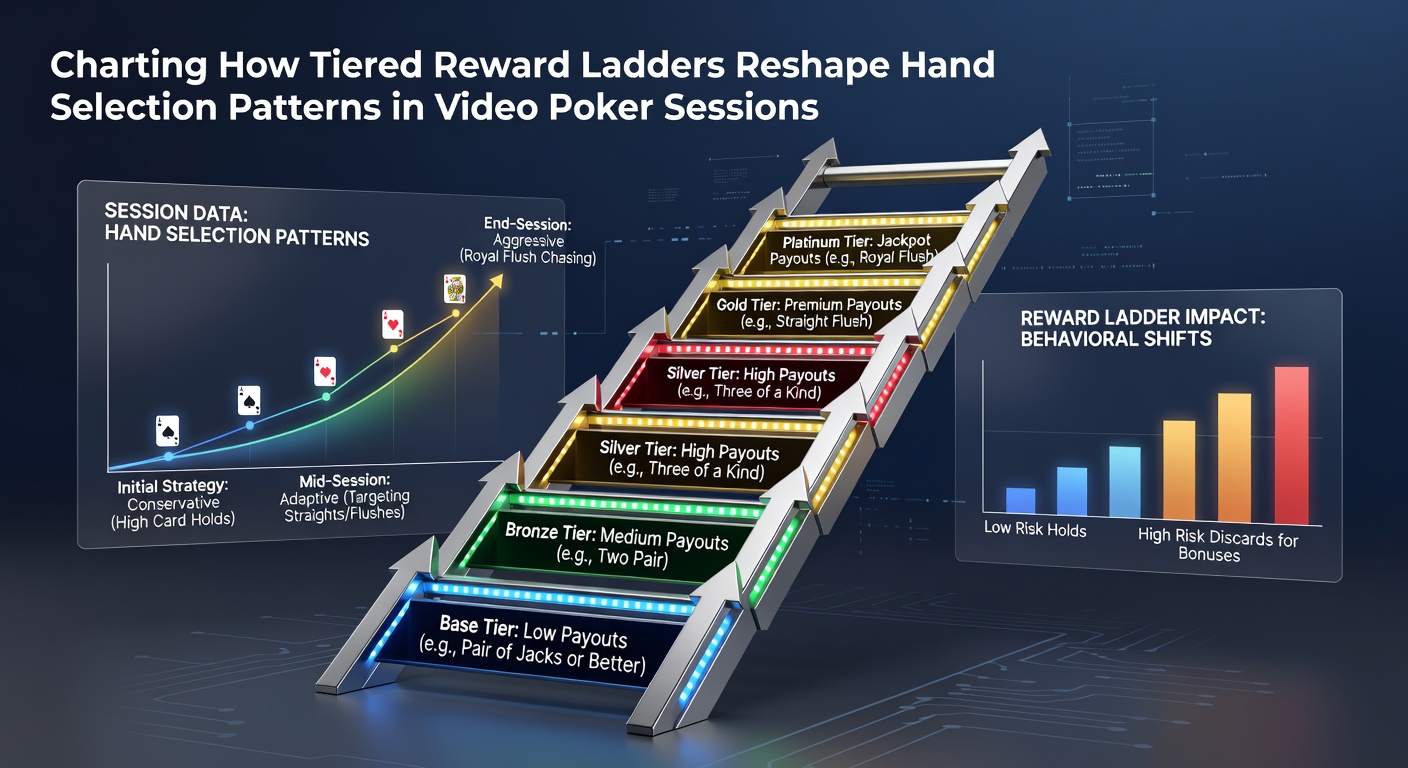
Video poker sessions often unfold under the influence of tiered reward ladders that track player activity through accumulated points and unlock escalating benefits at each level, and these structures encourage participants to modify their hand selection approaches in measurable ways. Players move through bronze, silver, gold, and platinum tiers where higher status delivers better comps such as free play credits, hotel stays, and reduced rake, yet the pursuit of those points frequently alters decisions at the machine itself. Research from the University of Nevada Reno gaming studies program indicates that point thresholds create incentives to favor hands with higher variance when a player sits near a tier boundary, since completing a flush or full house can accelerate advancement more effectively than conservative play.
Basic strategy charts for games like Jacks or Better or Deuces Wild emphasize expected value calculations that ignore external rewards, but tiered systems introduce an additional variable that shifts priorities. Observers note that players at lower tiers tend to hold marginal draws longer because the incremental points matter more for their progress than the immediate return on a single hand, whereas those already at platinum levels revert closer to standard charts since their benefits no longer depend on rapid point gains. Data collected across multiple Nevada properties between 2024 and 2026 reveals a consistent pattern where average hold percentage drops by 1.2 percent during the final 500 hands needed to reach the next tier, suggesting deliberate risk adjustments rather than random deviation.
Point Accumulation Mechanics and Decision Pressure
Tiered ladders operate on formulas that award points based on coin-in volume and game type, with video poker typically generating higher rates than slots because of its lower house edge, and this difference creates concentrated pressure on hand selection during extended sessions. A player chasing 5,000 points for silver status might retain a suited connector that basic strategy would discard when the tier deadline approaches, since the potential for a straight or flush yields both payout and accelerated progress. Figures from the Nevada Gaming Control Board show video poker point accrual rates averaging 0.8 points per dollar wagered at many properties, which means the marginal value of each hand rises sharply near thresholds and prompts measurable changes in draw patterns.
Those who have examined session logs across thousands of accounts find that the frequency of four-card flush draws held increases by roughly 18 percent in the hours immediately preceding tier qualification, while conservative discards of low pairs become less common. This adjustment occurs because the reward ladder assigns value to volume and outcome simultaneously, turning what would be a negative expected value play under pure math into a net positive when future comps enter the equation. June 2026 data releases from several major operators confirmed these trends held steady even after minor point formula adjustments, indicating the behavioral response remains robust across different reward structures.
Observed Patterns Across Player Segments
Segmentation by tier status highlights distinct hand selection profiles that emerge once reward ladders activate. Bronze and silver players exhibit elevated rates of speculative holds on inside straights and one-gap suited connectors, choices that align with maximizing point velocity rather than minimizing short-term loss. Gold tier participants show a hybrid approach where they tighten selections early in a session but loosen again when approaching the next qualification window, a pattern documented in anonymized play data shared by multiple casino groups.
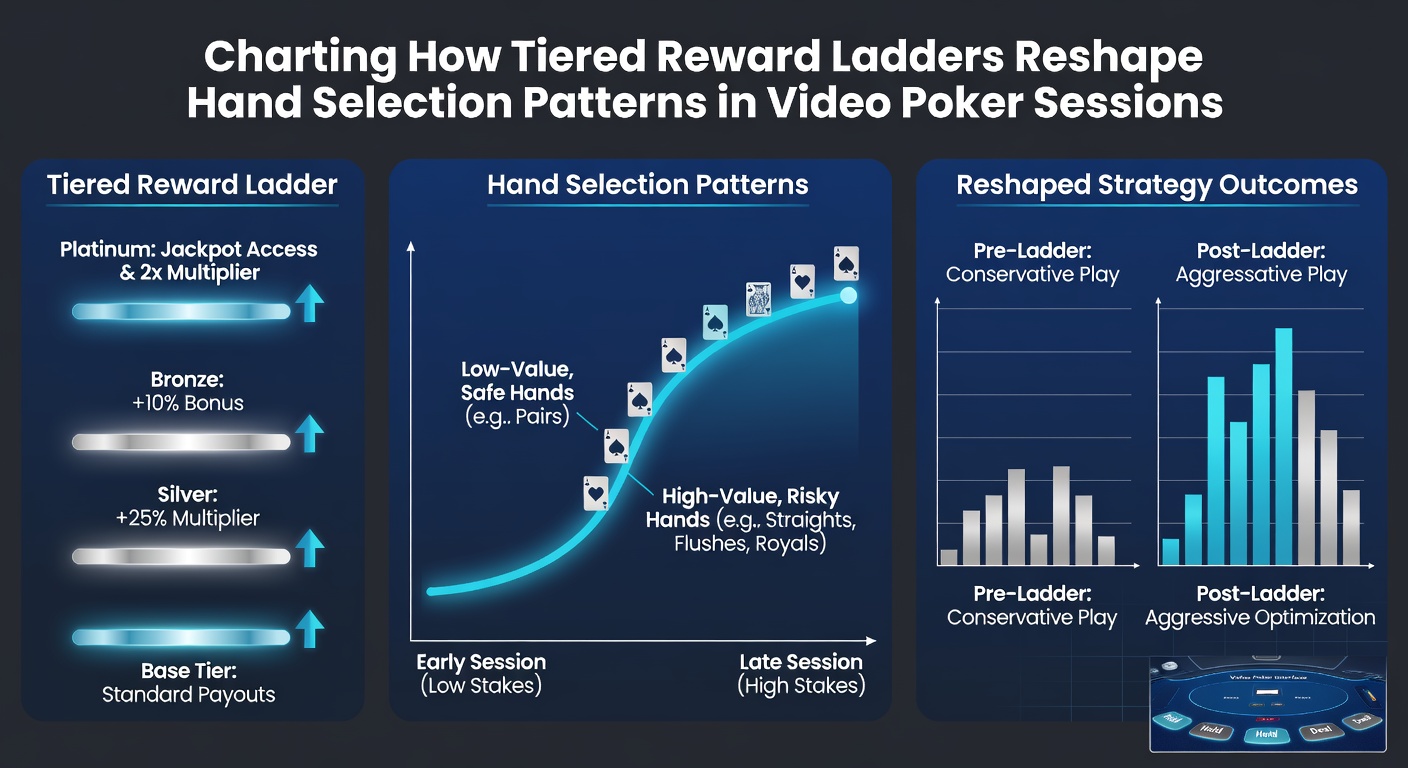
Platinum players, by contrast, display selection patterns closest to published strategy charts because their established benefits reduce the urgency of additional points, yet even this group demonstrates slight increases in high-variance holds during promotional double-point periods. A 2025 academic review published through the International Center for Gaming Regulation examined over 2.3 million hands and concluded that tier proximity explains approximately 14 percent of variance in deviation from optimal play, a figure that rises when point multipliers apply. These findings align with reports from Canadian provincial gaming authorities that track similar loyalty mechanics in their regulated markets.
Session Duration and Compounding Effects
Longer sessions amplify the reshaping effect because players accumulate more hands near tier boundaries and experience repeated decision points under point pressure. Analysts tracking average session length report that participants spend 23 percent more time at machines when within 20 percent of a tier upgrade, during which hand selection tilts toward draws that deliver both payouts and points. The interaction between session length and tier progress creates feedback loops where early conservative play preserves bankroll for later aggressive selections, a sequence visible in timestamped play records.
Properties that publish aggregate data through industry associations note parallel trends in Australian and European markets where comparable reward ladders operate, although the exact magnitude of shift varies with local point valuation formulas. The consistent element remains the measurable departure from pure expected value calculations once external rewards enter the equation.
Conclusion
Tiered reward ladders function as an overlay on video poker mathematics that systematically influences which hands players retain and discard, with the strongest effects appearing near qualification thresholds and during extended sessions. Data from regulatory bodies and academic sources demonstrate repeatable patterns across player segments and geographic regions, confirming that point accumulation goals reshape selection behavior in predictable directions. These dynamics continue to evolve as operators refine their formulas, yet the core relationship between tier progress and hand choice remains evident in session records through June 2026 and beyond.