Locking in the Wins: Matched Betting's Step-by-Step Math for Free Bet Profits
Locking in the Wins: Matched Betting's Step-by-Step Math for Free Bet Profits
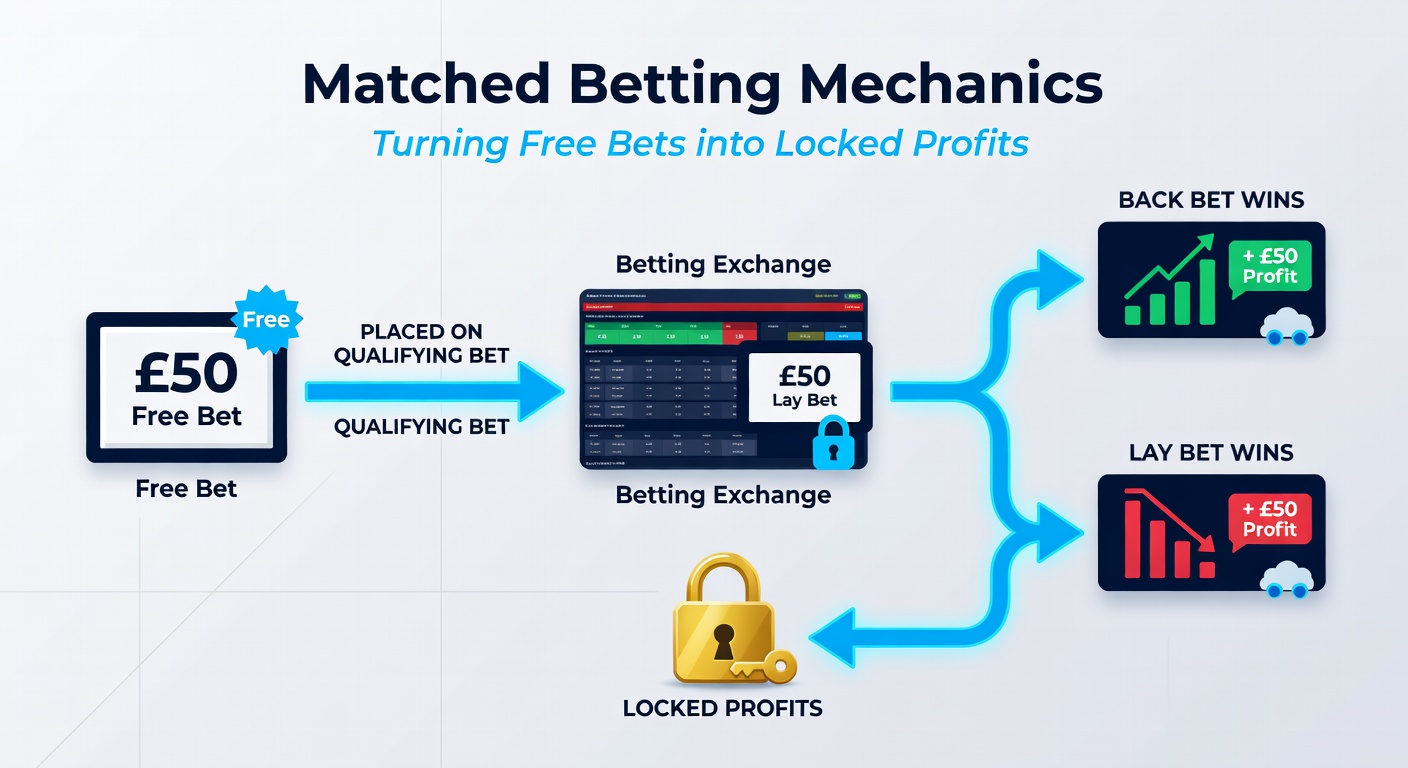
Matched betting has emerged as a method where individuals extract guaranteed profits from bookmaker promotions, particularly free bets, by placing offsetting wagers on betting exchanges; this approach relies on precise calculations to neutralize risk across back and lay positions, turning promotional offers into consistent cash returns without dependence on sporting outcomes.
Understanding the Basics of Back and Lay Bets
At its core, matched betting hinges on two complementary actions: backing an outcome with a traditional bookmaker while laying the same outcome on a betting exchange like Betfair or Smarkets, where users bet against the event happening; this duality creates a near-perfect hedge, meaning profits materialize regardless of whether the event occurs or not, as long as stakes align mathematically.
Back bets represent standard wagers where punters predict a team will win, say Manchester United to beat Liverpool at odds of 2.0 (even money), committing £100 for a potential £100 profit plus stake returned; lay bets, conversely, involve offering odds to others, effectively betting on Manchester United not winning, so if Liverpool triumphs or draws, the layer keeps the backer's stake minus commission.
What's interesting here is how exchange commissions—typically 2-5%—factor into the equation, prompting bettors to seek "close matches" where back odds approximate lay odds closely; data from exchange platforms reveals that selections with lay odds within 102-105% of back odds minimize qualifying losses to pennies, setting the stage for free bet exploitation.
Qualifying for Free Bets: The First Layer of Profit Locking
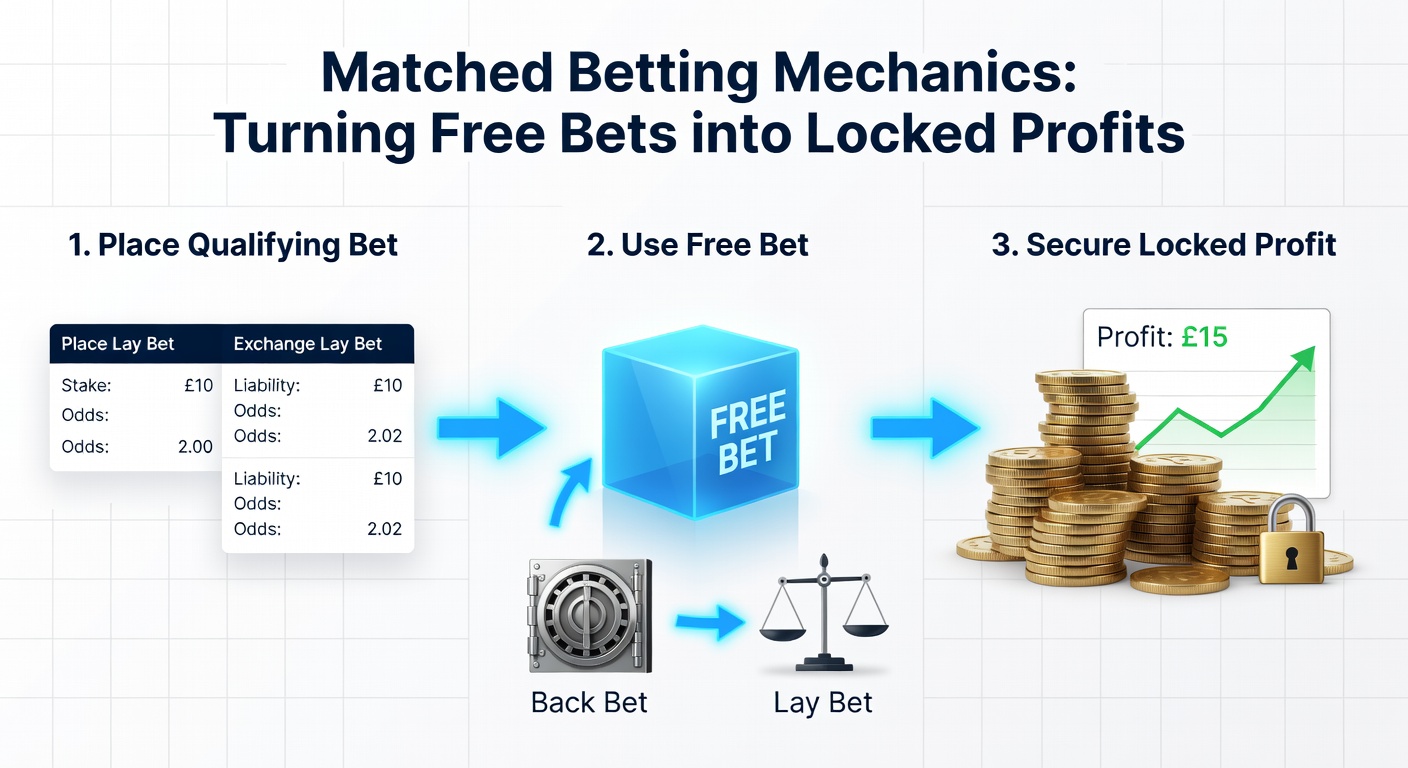
To unlock free bets, bettors first place a qualifying wager that meets bookmaker terms—often a minimum stake on any market at specified odds—while simultaneously laying it on the exchange; suppose a bookmaker requires a £25 bet at 2.0 odds for a £25 free bet, the backer stakes £25 to win £25 profit, but lays £26.32 on the exchange at 2.02 odds (liability £26.32, accounting for 2% commission), resulting in a tiny overall loss of about 4p after balancing.
This micro-loss serves as the entry fee for the free bet, which bookmakers credit post-settlement; turns out, repeating this across multiple sports—football, horse racing, tennis—amplifies volume, with one study from Gambling Research Australia noting that consistent qualifiers yield average monthly profits of AUD 500-1000 for disciplined users tracking 20-30 offers.
And while football dominates due to liquid markets, horse racing provides ample opportunities during peak seasons; experts observe that ante-post markets, with their longer lead times, often deliver tighter back-lay spreads, enhancing efficiency.
Extracting Value from Free Bets: The Profit Multiplier
Once the free bet lands—say £25 at 2.0 odds—the mechanics shift to pure extraction, as free bets carry no stake risk; bettors back an outcome again, like a horse at 3.0, staking the full free amount for £50 potential winnings, then lay on the exchange at 3.05 odds with a calculated liability of around £65 to match exposures.
Here's where it gets interesting: since the free bet stake isn't returned by the bookmaker on wins (only profit), the lay bet covers that gap; calculations show a 70-80% retention rate post-commission, so £25 free bet typically yields £17-20 cash, with formulas like lay stake = (free bet profit / (lay odds - 1)) ensuring precision.
Take a real-world case where a punter qualified for a £50 tennis free bet during Wimbledon; backing Djokovic at 1.5 odds yielded £25 profit from the free stake, laid at 1.52 for balanced cover, netting £19.50 after 5% commission—pure profit atop the qualifying qualifier's negligible cost.
Advanced Calculations and Tools for Precision
Manual math works for novices, but seasoned practitioners deploy calculators that input back odds, lay odds, and commission to spit out optimal stakes instantly; these tools, available from sites like OddsMonkey or Profit Accumulator, handle complexities like decimal adjustments or multi-leg accumulators where free bets trigger on parlays.
But here's the thing: for reload offers—recurring free bets on subsequent deposits—users scale stakes proportionally to bankroll, adhering to fractional Kelly-like sizing to avoid overexposure; figures from a National Council on Problem Gambling analysis in the US highlight how structured tools reduce errors by 90%, though the group emphasizes responsible scaling amid rising promo volumes.
So, with bankrolls starting at £500-1000 covering 50-100 qualifiers comfortably, growth compounds; one observer tracked a starter hitting £3000 profit in three months by cycling 40 offers, each averaging £20-30 net.
Navigating Market Dynamics and Common Pitfalls
Exchanges thrive on liquidity, yet low-volume markets like niche esports can widen back-lay spreads to 110%, eroding margins; researchers note that sticking to top leagues—Premier League, NBA—keeps discrepancies under 3%, preserving profitability.
Gubbing poses another hurdle, where bookmakers limit or close accounts spotting matched patterns; data indicates this hits after £1000-5000 profits, prompting diversification across 50+ firms and mixing genuine bets occasionally to mimic recreational play.
Yet, tax implications vary globally—in Australia, winnings remain tax-free for residents, per Australian Taxation Office guidelines—while exchange liabilities demand upfront funds, underscoring float management; as of April 2026, surging mobile apps from Australian operators like Sportsbet have flooded reload offers, boosting average monthly hauls to £800 for UK trackers adapting strategies.
Real-World Case Studies and Scaling Strategies
Consider Sarah, a part-time user who began with £200 bankroll in early 2025; by methodically claiming 15 welcome offers at £20-50 each, she locked £450 initial profits, then pivoted to reloads yielding £150 monthly—totaling £2200 by year's end, all documented via spreadsheet logs shared in community forums.
Scaling enters via team efforts or mug betting (simulating losses to unlock offers), though solo operators cap at 200 offers yearly for £5000-10000; it's noteworthy that during Euro 2024, enhanced football promos doubled typical yields, a pattern repeating in 2026 rugby sevens tournaments.
Now, communities like Matched Betting Blog forums dissect daily offers, with threads revealing 98% close-match availability across major books; this collective intel turns solo endeavors into systematic operations.
Regulatory Landscape and Future Outlook
Governments worldwide scrutinize promotions fueling matched betting; in Canada, Ontario's iGaming regulators capped free bet values at CA$200 in 2025 to curb exploitation, yet volumes persist via creative terms, according to provincial gaming reports.
That said, the model's resilience shines through adaptation—shifting to casino free spins or bingo bonuses using similar back-lay logic on qualifying games; as April 2026 unfolds, US states like New Jersey report 15% promo upticks post-legal expansions, per Division of Gaming Enforcement data, hinting at transatlantic growth.
Conclusion
Matched betting transforms volatile free bets into locked, repeatable profits through meticulous back-lay balancing and stake precision; while initial learning curves demand discipline, tools and market depth make it accessible, with data underscoring £500-2000 monthly potentials for consistent applicators.
Observers point out that as promotions evolve—welcome deals shrinking, reloads expanding—the core math endures; those who master qualifiers, extract cleanly, and diversify sidestep pitfalls, turning bookmaker generosity into sustainable edges in an ever-shifting landscape.