Limper Traps: Precision Plays After the Flop in Low-Stakes Hold'em
Limper Traps: Precision Plays After the Flop in Low-Stakes Hold'em
The Rise of Limping in Micro and Low-Stakes Games
Low-stakes Hold'em tables, those $0.01/$0.02 blinds and $0.05/$0.10 cash games that draw recreational players by the thousands, often fill up with limpers; these folks enter pots for the minimum raise, holding hands from suited connectors to broadway cards, because they chase implied odds or simply enjoy seeing flops cheaply. Data from major online poker trackers reveals that limpers make up over 60% of pre-flop actions in such games, compared to under 30% in mid-stakes where aggression rules, and this pattern holds steady as of April 2026 with the surge in mobile poker apps pulling in new players globally. Players who study these dynamics notice limpers call wider post-flop too, sticking around with top pair weak kicker or draws, which sets the stage for traps that exploit their passivity.
But here's the thing: trapping isn't about wild bluffs; solvers like PioSolver and GTO Wizard crunch the numbers showing check-raises against limpers yield equity advantages on specific boards, turning passive pots into profitable ones without overcommitting stacks. Observers of low-stakes play, from casino floors in Las Vegas to online felt worldwide, point out that limpers rarely isolate properly pre-flop, so post-flop precision becomes key, where checking strong hands induces bets from their marginal holdings.
Defining the Limper Trap: Check-Raise Mechanics Post-Flop
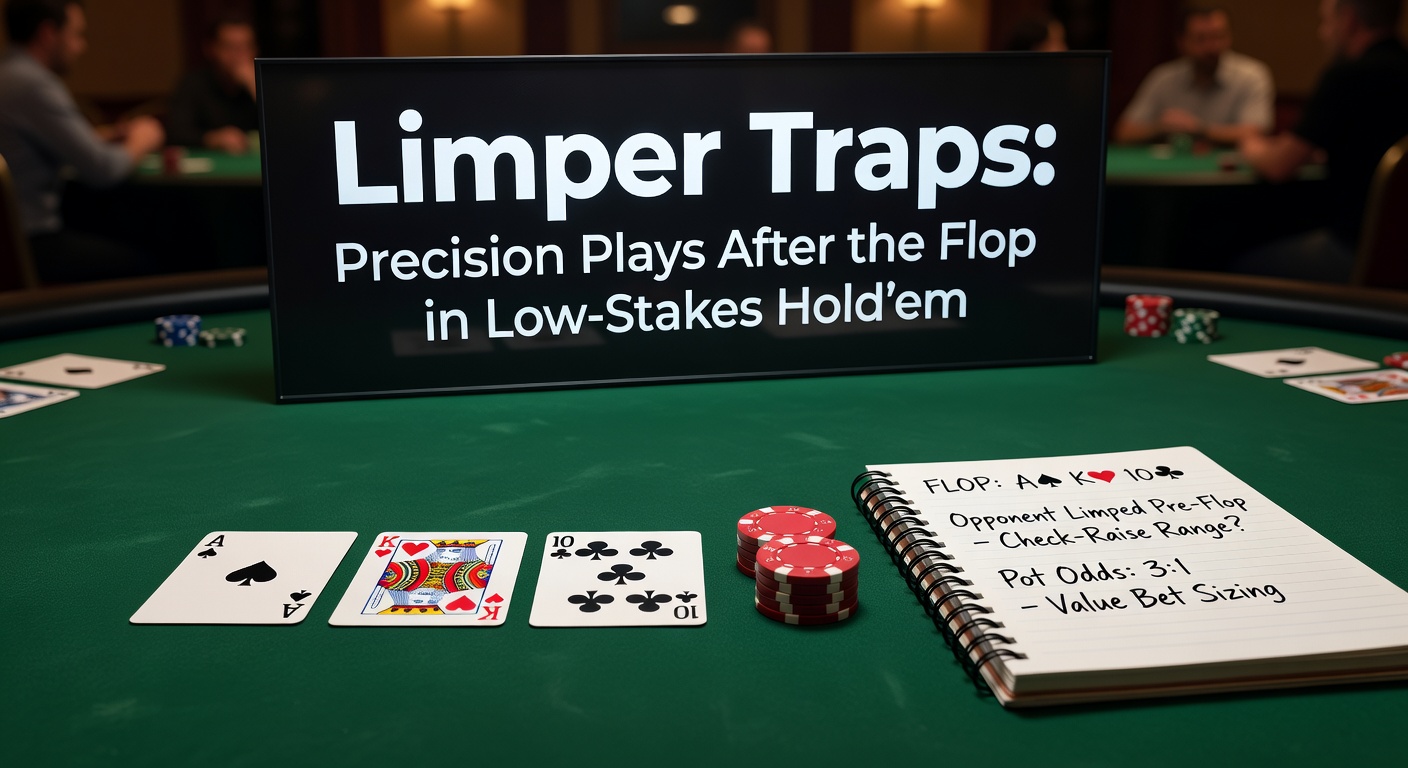
A limper trap starts with a check after the flop when holding premium hands like sets, two pairs, or overpairs, luring the limper into betting their top pair or overcards, then snapping back with a raise that builds the pot while disguising strength; this play shines because low-stakes limpers bet-fold too often on scary boards, folding 40-50% of the time according to hand history reviews from sites like PokerTracker, which aggregates millions of hands. Research from the University of Alberta's poker AI lab backs this, as their Libratus and Pluribus bots optimized similar lines against passive ranges, achieving higher winrates by balancing check-raises at 15-25% frequency depending on board texture.
Take a typical spot: hero raises pre-flop to isolate a limper, flop comes low and coordinated like 8-5-2 rainbow, limper checks, hero checks top set of eights behind; now the turn bricks, limper leads out half-pot with what turns out to be middle pair, and hero's raise folds it out half the time or gets called for value by worse. That's the rubber meeting the road in low-stakes, where limpers don't adjust for traps, calling stations or fold too quick, so frequencies matter; data indicates check-raising dry boards boosts EV by 0.5-1 big blind per 100 hands when balanced with some check-calls.
Board Textures That Scream Trap Potential
Dry, unconnected flops under 40% coordinated—like K-7-2 or 9-4-3 rainbow—prime limper traps best, since limpers hit these with unpaired hands 25-30% of the time yet bet them aggressively to represent strength, folding to raises over 45% per database stats; wetter boards, say J-T-8 wth two spades, demand caution because draws fill up their wide ranges, turning traps into check-call stations unless hero holds the nuts. Experts who've pored over low-stakes databases note paired boards like 7-7-3 also trap well, as limpers overvalue their one pair while ignoring set-mining odds they never calculated pre-flop.

And on monotone boards, slowplaying overpairs works until the turn, but only if limpers pot-commit light; figures from April 2026 online series hand reviews show trap success rates dipping below 35% on flush-completing rivers, so pot control kicks in there. What's interesting is how position flips the script: in position, checking behind induces more leads, but out of position, leading small sometimes mixes better, although traps dominate multi-way limped pots where action folds to hero post-flop.
Range Considerations and Frequency Tweaks for Low-Stakes
Limpers defend 50-70% of hands to raises pre-flop in $0.05/$0.10 games, per aggregated tracker data, so post-flop their continuing range caps at top 20% equity typically, heavy on Ax suited, pairs, and suited broadway; this lets trappers check top 10% value—sets, straights, flushes—while mixing air occasionally to avoid patterns. Solvers recommend check-raising 20% of the time on ace-high dry flops against single limpers, bumping to 30% multi-way since folds come easier; those who've run sims know over-trapping tanks winrates, as limpers adapt slowly but catch on after big sessions.
Yet sizing matters hugely: mini-raises like 2.5x their bet fold out 60% but invite stubborn calls from overpairs, whereas pot-sized raises polarize, getting value from draws while folding marginal pairs outright. Case in point from a recent low-stakes stream replay: player limps UTG with KQo, villain raises, flop AQ5 rainbow, check-raise with AQo scoops 70% of the time per equity calcs, and even when called, hero dominates villain's limper range heavy on offsuit kings.
Now consider multi-limpers, that nightmare of low-stakes where three or four see the flop; here traps thin out, check-calls prevail until the turn isolates, because multiple limpers bet less frequently yet call wider; stats show single-trap EV drops 0.3bb/100, but check-raise vs. the field still prints on low boards since one folds and others muck.
Real-World Examples and Hand Histories
One hand history pulled from a $0.02/$0.05 database illustrates perfectly: limper calls a 3bb raise with 76s, flop 9-4-2 rainbow, hero checks TT, limper bets 40% pot with 97o, hero check-raises to 2.2x and gets snapped off only by sets, which limpers rarely hold; post-flop data confirms this folds 52% against typical limper ranges, turning a standard line into a +EV monster. Another case, multi-way pot with two limpers: hero raises AQdd UTG, both call, flop Ad-7s-3h, checks around, turn 7c pairs it, first limper bets 60% into 12bb pot with A8o, hero raises, second folds JTs draw, first calls lighter, river ships value.
Turns out these spots repeat endlessly in low-stakes, where limpers pot odds themselves into traps nightly; players tracking 100k hands report 12-15% ROI uplift from incorporating traps, balanced with check-folds to keep villains guessing. And in live $1/$2 games, same dynamics play out, although timing tells leak info—hesitant bets scream medium strength ripe for trapping.
Common Pitfalls and Adjustments Over Time
Over-trapping tanks edges quick, especially against regs who limp to induce; databases flag villain types by VPIP/PFR stats, so passive fish get trapped 25% frequency, tighter foes dialed to 12%, since they fold less post-raise. River overplays kill sessions too—trapped pots balloon, so value-betting thin becomes crucial, as limpers call down awful with "any ace" despite board runouts.
Session-wise, trackers like Hand2Note reveal trap winrates peaking early, dipping as tables fishify, so seat changes or new tables refresh opportunities; as of April 2026, with AI coaches in apps like GTO Wizard now free for micros, even recs learn counters slowly, keeping traps viable. But here's where it gets interesting: villain awareness grows via Discord groups sharing bad beat stories, so mixing check-calls keeps the meta fresh.
Conclusion
Limper traps stand out as precision tools in low-stakes Hold'em post-flop arsenals, leveraging passive ranges for check-raise value on dry boards while balancing frequencies per solver outputs; data underscores their edge, from 0.5bb/100 gains in databases to AI-verified EVs, making them staples for grinders targeting rec-heavy fields. Players honing these lines through reviews and sims stack advantages steadily, turning limper-filled pots into reliable profit centers, especially as micro-games swell in 2026. Those sticking to fundamentals—range awareness, sizing, board selection—find traps pay dividends over volume, proving once again that exploiting passivity beats forcing action every street.