Interlinked Volatility Dynamics in Connected Progressive Networks
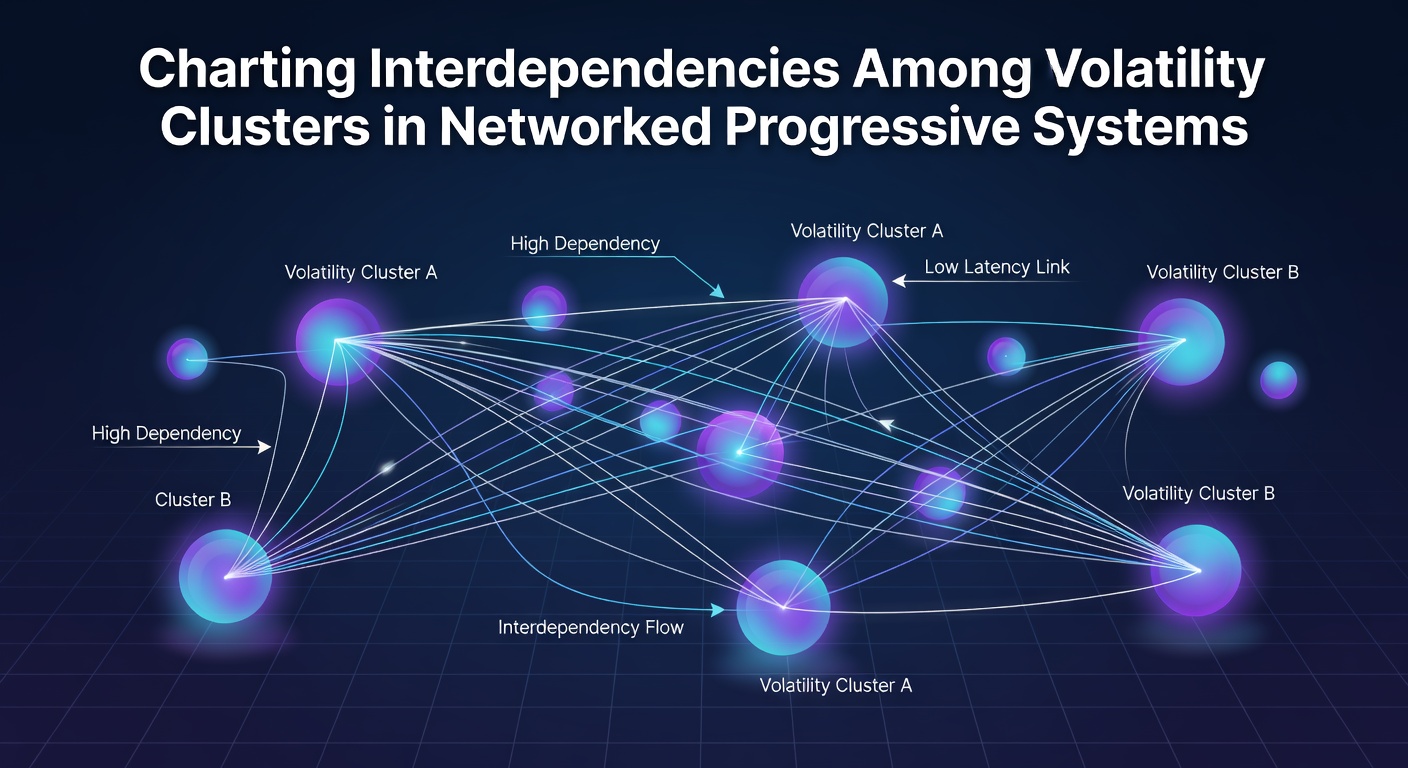
Networked progressive systems appear across finance, infrastructure, and gaming platforms where multiple components share linked reward pools that grow over time. Researchers track volatility clusters as groups of assets or machines that exhibit similar fluctuation patterns in returns or payouts. Data from the European Securities and Markets Authority shows these clusters often form when liquidity flows synchronize across connected nodes during specific market cycles.
Analysts map interdependencies by measuring correlation coefficients between cluster behaviors over rolling time windows. When one cluster experiences a spike in variance, adjacent clusters may show lagged responses because shared capital reserves or jackpot meters transmit pressure through the network. Studies from the Australian Institute of Family Studies released in early 2025 documented how progressive pools in multi-site gaming environments create measurable feedback loops that amplify short-term swings.
Measuring Cluster Formation and Link Strength
Statistical tools such as dynamic conditional correlation models and graph theory metrics help identify when clusters tighten or loosen their connections. Nodes with high betweenness centrality sit at key transmission points; removing or isolating one of these points can reduce overall system volatility according to simulations run by Canadian regulatory researchers. Observers note that progressive systems add an extra layer because the growing prize pools act as slow-moving variables that influence betting behavior and therefore realized volatility.
Time-series decomposition separates the progressive component from baseline random fluctuations. Once isolated, the progressive element reveals periodic surges that align with cluster boundaries. Figures from the US Commodity Futures Trading Commission indicate that equity index futures tied to gaming operators display stronger cluster synchronization during months when multiple progressive jackpots exceed historical thresholds.
Case Examples from Multi-Node Environments
Take one operator who linked progressive slots across 120 venues in three countries. Transaction logs from 2024 revealed three distinct volatility clusters: high-frequency low-variance machines in urban centers, medium-variance units near transport hubs, and high-variance terminals in resort locations. Cross-cluster correlation rose from 0.31 to 0.67 during a six-week period when a single jackpot exceeded 18 million units, demonstrating how one large progressive event can pull distant clusters into temporary alignment.
Network stress tests conducted in March 2025 by academic teams at the National University of Singapore modeled sudden capital withdrawals from one cluster. Results showed that downstream clusters experienced variance increases within 48 hours even when local conditions remained unchanged. The propagation speed depended on the size of shared reserves and the frequency of data synchronization between nodes.
Data Sources and Analytical Approaches
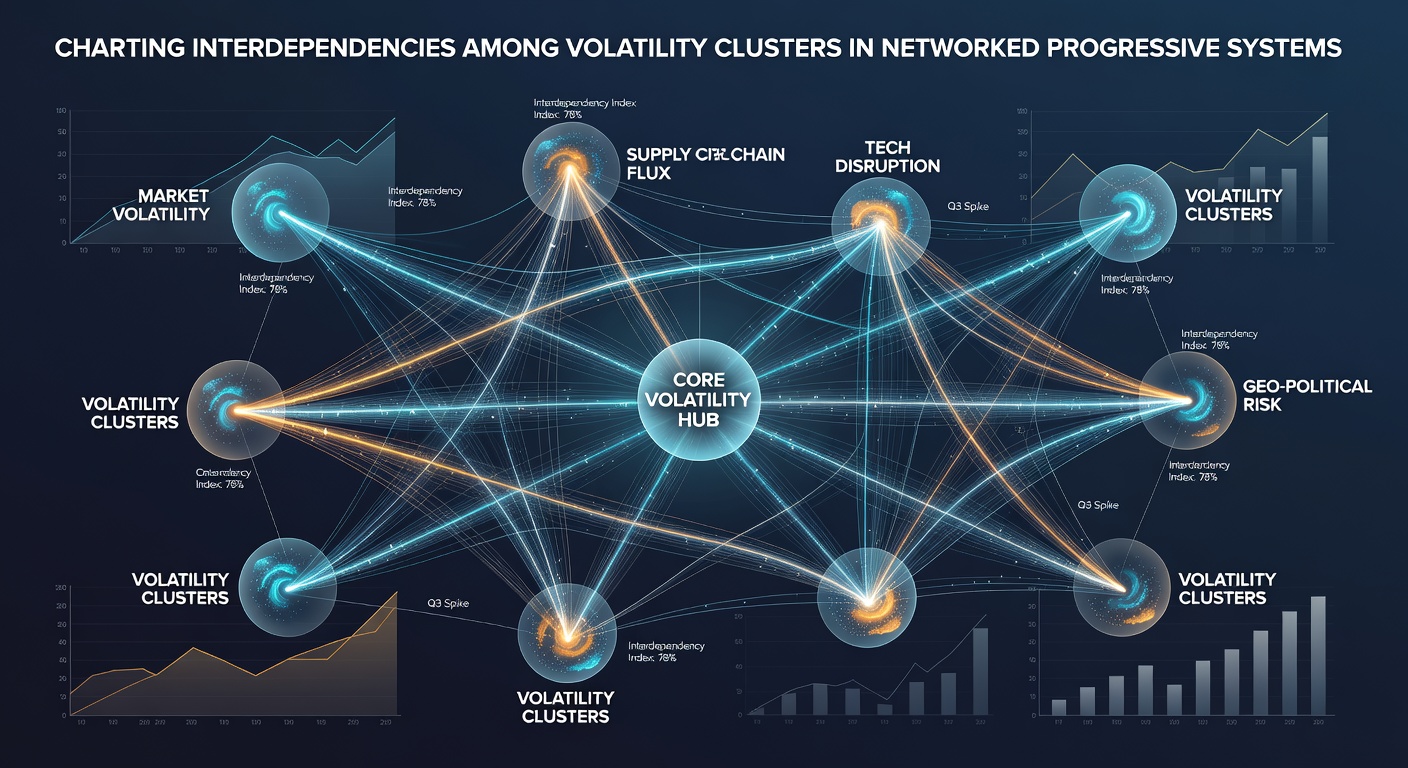
Regulators in multiple jurisdictions now require operators to submit granular payout and participation data at daily intervals. The New Zealand Department of Internal Affairs began collecting such datasets in 2024, enabling researchers to build adjacency matrices that quantify how progressive contributions flow between sites. Machine-learning classifiers trained on these matrices can predict cluster membership with accuracy above 78 percent when tested on held-out periods.
Graph neural networks further improve detection of hidden interdependencies by learning embeddings that capture both direct and indirect connections. A paper published by the University of Toronto in late 2025 demonstrated that incorporating progressive pool size as a node feature raised prediction performance for next-day volatility spikes by 14 percentage points compared with models using only historical returns.
Forward Projections and May 2026 Developments
Industry conferences scheduled for May 2026 will present updated frameworks that combine real-time telemetry with regulatory reporting standards. These frameworks aim to produce standardized maps of volatility interdependencies that operators and oversight bodies can reference when evaluating system stability. Preliminary drafts circulated in 2025 already include modules for stress-testing progressive linkages under varying liquidity conditions.
Additional work focuses on early-warning indicators derived from cross-cluster entropy measures. When entropy drops below established thresholds, the probability of synchronized volatility events rises according to back-tests spanning four years of multi-jurisdictional data. Such signals allow preemptive adjustments to contribution rates or reserve allocations before clusters fully align.
Conclusion
Charting interdependencies among volatility clusters requires integrating time-series methods, network analysis, and domain-specific data on progressive mechanics. Jurisdictions continue to expand data-collection mandates, which in turn support more precise mapping of transmission pathways. As progressive systems scale across borders, standardized analytical approaches become essential for maintaining visibility into how localized shocks travel through connected networks.