Establishing Responsive Bankroll Thresholds During Layered Promotion Integration Across Hybrid Casino Formats
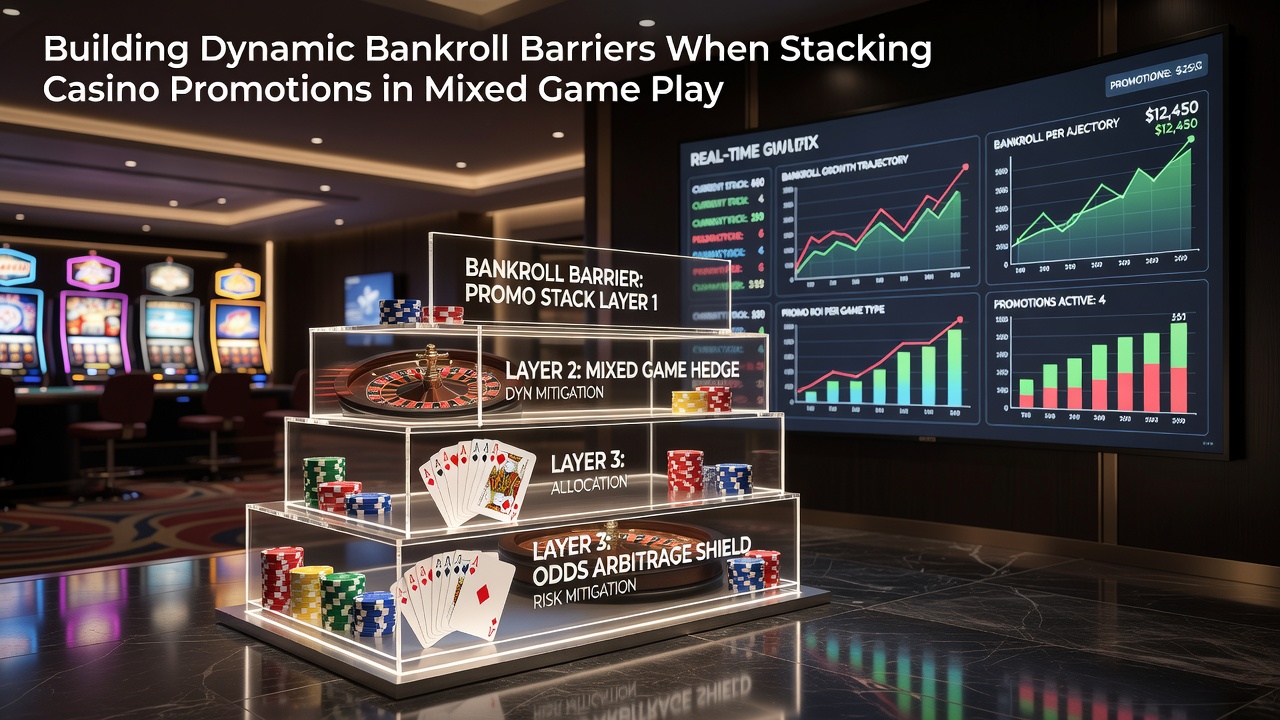
Players navigating casino environments often encounter multiple promotions that require careful coordination, and data from regulatory filings shows that structured bankroll management becomes essential when these offers overlap in mixed game formats including blackjack, poker variants, and roulette. Observers note that effective barriers prevent rapid depletion while allowing participation in several incentives at once, and studies from academic institutions confirm that predefined limits reduce variance exposure in combined sessions.
Defining Bankroll Barriers in Promotion Contexts
Bankroll barriers function as adjustable checkpoints that allocate portions of total funds to specific promotion tiers, and researchers at the University of Nevada have documented how such divisions maintain play integrity when bonuses stack across table games. A player might designate thirty percent of available capital for deposit match offers while reserving another segment for free spin or cashback layers, which allows seamless transitions between formats without exhausting resources prematurely. Data indicates that operators track these patterns through loyalty systems, and figures reveal increased session lengths when barriers adjust dynamically based on remaining bonus wagering requirements.
Mechanics of Stacking in Mixed Play
Stacking occurs when deposit bonuses combine with reload incentives or loyalty multipliers during a single visit, yet mixed game play introduces variable house edges that affect barrier recalibration. One documented approach involves setting initial thresholds at fifty percent of the bonus value for high-volatility options like certain poker side bets, while lower thresholds apply to steadier games such as blackjack with basic strategy. According to industry reports from the Nevada Gaming Control Board, operators processed higher volumes of stacked promotions in early 2026, and analysts attribute part of this rise to players who recalibrate barriers mid-session using real-time balance tracking.
Barriers gain responsiveness through formulas that factor in both bonus terms and game-specific return-to-player rates, and evidence suggests that those who monitor these metrics experience steadier capital preservation across extended periods. For instance, a session blending video poker with live dealer tables might trigger an automatic shift when one game's contribution rate toward wagering clears faster than anticipated, prompting reallocation to the next available promotion layer.
Implementation Steps for Dynamic Adjustments
Initial setup requires listing all active promotions alongside their expiry dates and contribution percentages, after which barriers receive assignment based on total bankroll and individual game edges. Software tools from various platforms assist in visualizing these allocations, and updates occur whenever a promotion completes or a game type changes. Research published in the Journal of Gambling Studies highlights that systematic updates correlate with lower instances of premature session termination, particularly in jurisdictions where multiple operators compete through overlapping offers.

Further refinement comes from incorporating loss limits that scale with remaining bonus amounts, and this method proves useful when transitioning from slots to table games where bet sizing varies. Those who've applied these techniques report that barriers set at intervals of twenty percent increments allow incremental testing of new promotion combinations without committing full resources at once. Regulatory data from Australian authorities shows similar patterns among participants who layer offers across poker and roulette formats during peak periods in mid-2026.
Monitoring and Recalibration Techniques
Continuous tracking involves logging each game's contribution toward clearing requirements, and this practice supports timely barrier movement when one segment approaches completion. Observers have noted that spreadsheets or dedicated apps simplify the process, enabling quick shifts when volatility spikes in certain mixed formats. Evidence from Canadian provincial gaming reports indicates that players employing such methods maintain longer engagement windows, especially when promotions include time-sensitive multipliers that reward consistent play across multiple titles.
Yet barriers must also account for withdrawal conditions attached to stacked offers, and failure to align these with bankroll checkpoints can lead to locked funds despite apparent progress. Analysts at the European Gaming and Betting Association have compiled statistics showing that structured checkpoints reduce such conflicts, and the data covers sessions where players rotate between live and electronic variants while bonuses remain active.
Conclusion
Dynamic bankroll barriers provide a framework for handling layered promotions without compromising overall capital structure, and their application in mixed game settings relies on ongoing adjustment informed by game mechanics and offer terms. Figures from multiple regulatory sources confirm that participants who adopt these methods sustain participation rates more effectively across varied formats. As promotion structures evolve through 2026, the core principles of threshold setting and real-time recalibration continue to underpin balanced engagement in casino environments.