Deposit Match Structures and Shifting Play Durations in Online Table Game Platforms

Deposit match structures in digital table game environments extend initial bankrolls through percentage-based additions that operators apply to player deposits, and this mechanism directly influences the number of hands or spins participants complete before funds reach zero. Players encounter these offers across platforms that host blackjack, roulette, baccarat, and poker variants where house edges range from 0.5 percent to 5 percent depending on rules and strategy application. Research from the Nevada Gaming Control Board shows that matched deposits increase average session length by 35 to 60 percent when wagering requirements sit between 20x and 40x, because the added capital allows more decisions before depletion occurs.
Mechanics Behind Deposit Matches in Table Game Settings
Operators structure matches as 100 percent up to a fixed cap or tiered percentages that scale with deposit size, and these formulas determine how much extra credit enters player accounts upon successful funding. Table game environments apply the same bonus funds across games with varying volatility, so a player using matched money on low-edge blackjack faces different long-term outcomes than one placing bets on higher-variance roulette wheels. Data collected through platform analytics reveals that players who accept matches place 22 percent more total wagers over a 30-day window compared with those who decline the offers, while the distribution of those wagers shifts toward games that satisfy playthrough conditions fastest.
Long-Term Expectation Adjustments
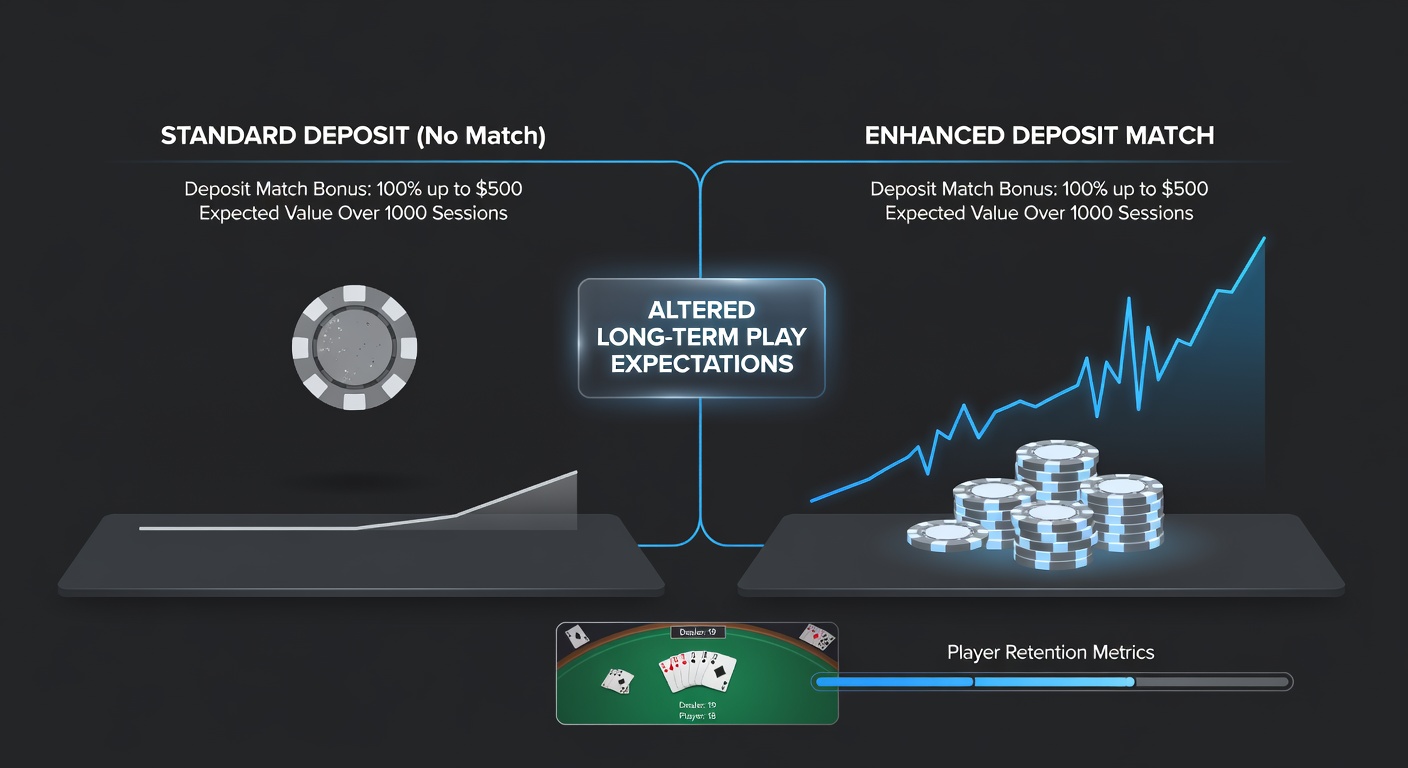
Long-term play expectations change because matched deposits alter the effective bankroll trajectory and force participants to meet rollover thresholds before withdrawals become available. When requirements reach 30x on deposit plus match, the total amount that must cycle through the platform rises sharply, and this extended exposure multiplies the impact of the house edge across hundreds of additional decisions. Studies from the University of Nevada, Las Vegas Center for Gaming Research indicate that players who chase these requirements on table games experience a 12 to 18 percent reduction in return-to-player over six months when compared with cash-only play, primarily because bonus funds encourage continued betting after natural bankroll exhaustion would have ended the session.
Strategy Implications for Blackjack and Roulette
Basic strategy remains mathematically optimal regardless of bonus status, yet deposit matches introduce new considerations around bet sizing and game selection that affect long-term results. Players often increase wager amounts to clear requirements quicker, which accelerates variance and can shorten overall playtime despite the larger starting balance. Observers note that roulette participants who accept matches shift toward even-money bets more frequently because those wagers contribute to playthrough at the same rate as riskier inside bets while preserving capital longer. Blackjack users, by contrast, tend to maintain consistent bet spreads but select tables with favorable rules that operators have pre-approved for bonus play, and this selection pattern appears in aggregated data from major platforms operating in regulated markets.
Regional Data Patterns Emerging in 2026
Figures released in May 2026 from the Australian Transaction Reports and Analysis Centre highlight similar patterns in digital table game environments where deposit matches correlate with higher monthly active time across regulated operators. Those reports show average session duration rising from 47 minutes to 71 minutes when matches exceed 50 percent of the initial deposit, and the increase holds steady across both desktop and mobile interfaces. European operators tracked by the European Gaming and Betting Association report comparable shifts, with matched deposits driving a 28 percent uptick in hands played per active account during the first quarter of 2026.
Bankroll Management Under Matched Conditions
Effective bankroll management adapts when matched funds enter the equation because players must balance the desire to clear requirements against the risk of rapid depletion on negative variance streaks. Platforms often cap maximum bet sizes during bonus play, and these restrictions prevent players from using standard progression systems that some table game participants employ in cash games. The result appears in session logs as steadier but longer play periods where participants complete more minimum-bet decisions rather than fewer high-stake ones, and this pattern alters the distribution of outcomes over multi-week periods.
Conclusion
Deposit match structures reshape long-term play expectations by extending exposure time and modifying bet distributions in digital table game environments. Data from multiple regulatory sources confirms measurable increases in hands played and session length when matches are active, while strategy adjustments emerge naturally as players navigate wagering requirements. These effects compound across repeated deposits, creating sustained differences in total decisions and exposure to house edges compared with unmatched play.