Decoding Accumulation Rates for Points in Casino Reward Tiers

Casino operators structure loyalty programs around multiple tiers that adjust point accrual based on player activity levels and these systems track wagers across slots, table games, and other offerings to determine rewards eligibility. Points serve as the core currency within such frameworks, converting play volume into redeemable value while tier placement influences the speed at which those points build up over time.
Core Mechanics of Point Calculation
Base accumulation begins with a standard rate applied to every dollar wagered, yet operators calibrate this figure differently depending on the game category and specific property policies. Slots typically generate points at one rate per coin played while table games apply formulas tied to average bet size and time at the table, and video poker falls somewhere in between according to documented payout structures. Research from the American Gaming Association shows that these base formulas remain consistent within individual properties even as player volume increases, creating predictable earning patterns for regular participants.
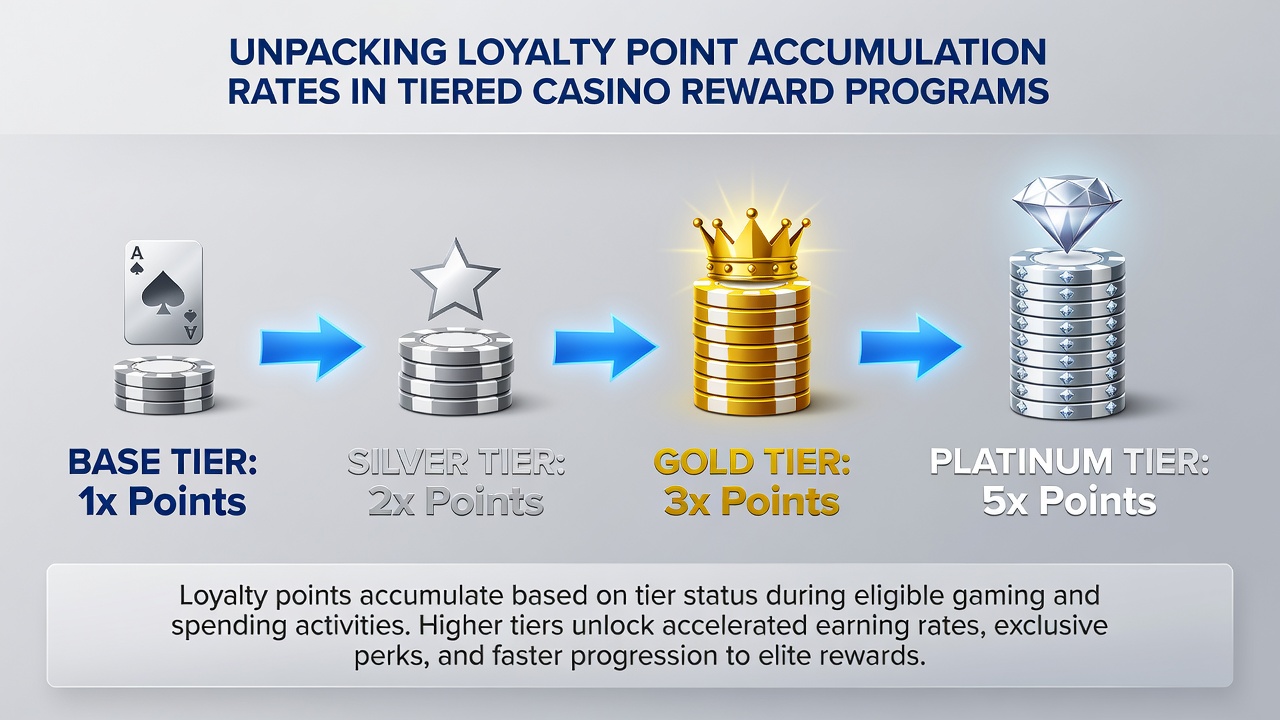
Tier advancement multiplies the base rate once a player reaches designated thresholds measured in points or theoretical loss. Silver levels often apply a 1.25 multiplier, gold structures reach 1.5, and platinum or diamond designations can double or triple the original accrual speed in many programs. Those who've studied casino databases note that the multiplier activates immediately upon tier qualification and applies retroactively to the current earning period in select cases.
Game Type Variations and Regional Patterns
Accumulation differs sharply across game types because operators assign distinct theoretical loss percentages to each category before converting activity into points. Blackjack and roulette carry lower point values per dollar bet compared with slot machines since house edges and play speeds factor into the internal algorithms. Video poker and craps occupy intermediate positions, and these distinctions encourage players to distribute wagers strategically across multiple offerings to optimize total point output within a single visit or membership cycle.
Geographic location further shapes these rates as regulatory environments in Nevada, New Jersey, and international markets impose different transparency rules around reward disclosures. Data compiled through 2025 indicates that properties in competitive markets adjust multipliers more frequently to retain high-volume players while regional authorities track aggregate point distribution to monitor responsible gaming metrics.
Adjustments Observed in Mid-2026
By July 2026 several large operators introduced updated accrual tables that incorporated new software integrations for real-time tier tracking and these changes coincided with expanded data reporting requirements from oversight bodies outside the United Kingdom. The revisions standardized how partial tier progress carries forward between calendar quarters and clarified point expiration policies tied to inactivity periods. Observers note that such updates streamlined earning transparency without altering underlying multipliers in most documented cases.
Industry reports also highlight that online and retail programs began aligning accrual formulas more closely during this period, allowing cross-platform play to contribute toward unified tier status. This convergence produced measurable shifts in point velocity for hybrid players who split activity between mobile apps and physical properties.
Practical Examples from Established Programs
One major operator applies a base rate of one point per five dollars wagered on slots at the entry tier, then scales this to one point per three dollars once a player reaches the top designation. Another program calculates table game points through a formula that divides average bet by a fixed divisor before applying the tier multiplier, resulting in different daily outputs for identical wager volumes. Those who've examined member statements across multiple properties confirm that these variations produce noticeably different reward timelines even when total theoretical loss remains constant.
Seasonal promotions occasionally layer additional multipliers onto existing tier benefits, though the base structure stays intact. Such overlays appear most often during slower revenue months and provide temporary boosts that revert once the promotion window closes.
Conclusion
Tiered casino reward programs operate through layered formulas that combine base rates with progressive multipliers to determine point accumulation speed. Game categories, regional regulations, and periodic software updates all influence the final output while maintaining consistent internal logic across player sessions. As operators continue refining these systems in 2026 and beyond, the underlying mechanics remain centered on converting wager volume into measurable loyalty value through transparent, tier-adjusted calculations.