Covariance Mapping Strategies for Balancing Diverse Wager Types Within Single Sessions
Mara Long · Aug 5, 2026
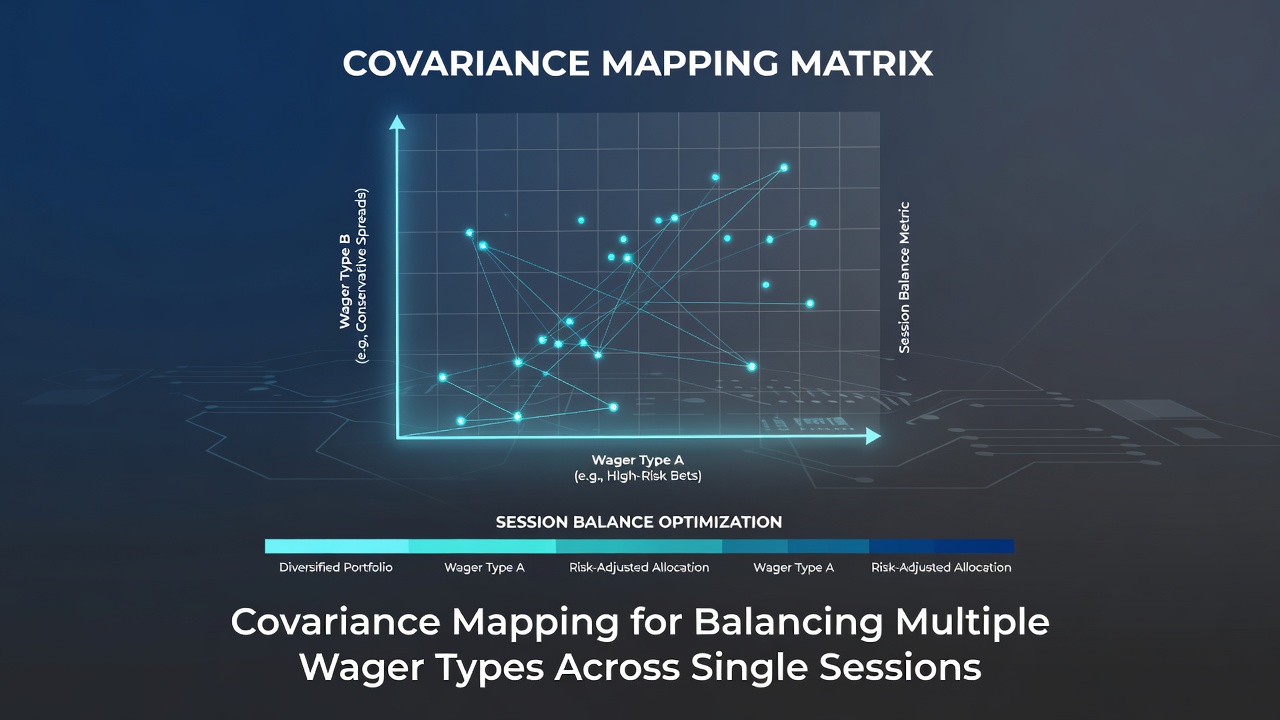
Covariance Mapping Strategies for Balancing Diverse Wager Types Within Single Sessions
Observers note that covariance mapping has emerged as a statistical approach for managing risk across varied wager categories during one continuous session, and researchers continue to refine its applications in probability models that connect different bet structures. Data from industry reports indicate that bettors often combine sports wagers with table game stakes or slot plays within the same period, which creates overlapping variance patterns that standard deviation calculations alone fail to capture fully.
Core Principles Behind Covariance Mapping
Experts define covariance as the measure of directional movement between two random variables, and in wagering contexts this extends to how outcomes from one bet type influence the overall session volatility when paired with another. Those who apply mapping techniques calculate pairwise covariances across categories such as fixed-odds sports bets, spread wagers, and casino games, then construct matrices that reveal positive or negative correlations. Positive covariance signals that losses or wins tend to align across types, whereas negative values suggest offsetting effects that can stabilize net results over the session duration.
Studies released in August 2026 from North American research institutions highlight how these matrices help identify optimal allocation weights, and analysts at several universities have published frameworks showing reduced session-level variance when covariance-adjusted portfolios replace equal-stake distributions. The approach builds on portfolio theory principles long used in financial markets, yet adapts them to the discrete outcome structure of gambling events where each wager resolves independently but shares underlying risk factors like market liquidity or game rules.
Implementation Steps in Practical Settings
Practitioners begin by collecting historical outcome data for each wager type under consideration, then compute covariance values using standard formulas that divide summed deviations by the sample size minus one. Next they generate a mapping grid that plots these values against expected returns, which allows identification of combinations where high-covariance pairs receive lower combined exposure. Software tools now automate much of this matrix construction, and several gaming analytics platforms integrate real-time feeds to update maps as new session data arrives.
One documented workflow involves segmenting a session into sequential blocks, recalculating partial covariances after each block completes, and adjusting subsequent stakes accordingly. This dynamic process accounts for realized results rather than relying solely on pre-session estimates, and evidence from Canadian provincial gaming reports shows measurable improvements in realized risk metrics when operators test similar methods on aggregated player data.
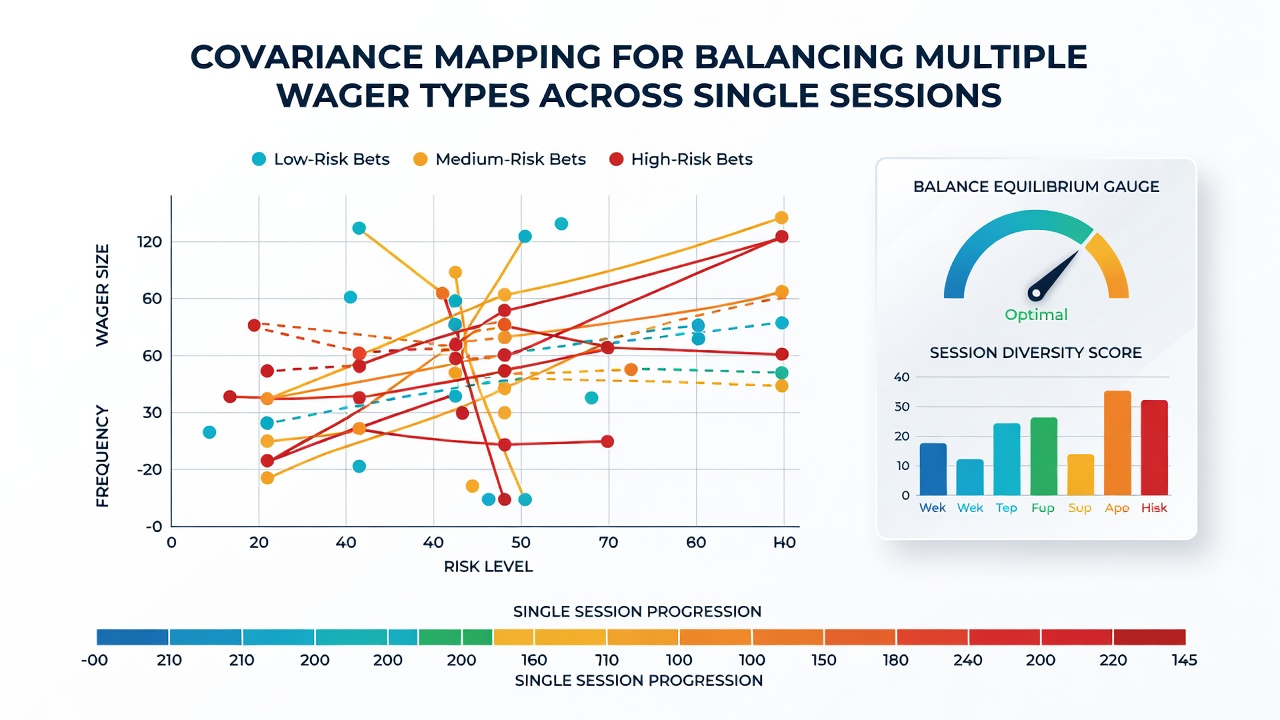
Examples Across Mixed Wager Categories
Consider a session that mixes horse racing straight bets with blackjack hands and occasional roulette spins. Covariance calculations often reveal moderate positive correlation between racing and blackjack outcomes due to shared elements like bettor decision timing, while roulette displays near-zero covariance with both. Mapping these relationships leads to stake adjustments that reduce the combined variance by directing larger portions toward the lower-covariance element. Australian academic papers on gaming mathematics describe comparable setups where session simulations produced tighter distribution curves around expected value when covariance weights guided allocation.
Another case involves pairing live sports betting with pre-match accumulator structures. Live markets frequently exhibit negative covariance with pre-match accumulators because in-game developments alter probabilities in opposing directions. Researchers at European statistics centers have documented how mapping these inversions allows session planners to maintain exposure levels that would otherwise trigger early stop-loss triggers under simpler variance models.
Data Trends Observed Through 2026
Figures compiled by independent analytics groups in August 2026 indicate growing adoption of covariance tools among professional syndicates operating across multiple jurisdictions, and regulatory filings from several Australian states reference increased use of advanced risk-mapping software in licensed venues. These trends coincide with broader availability of session-level data streams that feed directly into covariance engines, enabling finer granularity than earlier aggregate approaches permitted.
Industry associations in North America and Europe have begun publishing guidelines that outline minimum data requirements for valid covariance estimates, and academic partnerships continue to test extensions that incorporate higher-order moments such as skewness and kurtosis. The resulting models aim to address tail-risk events that standard covariance matrices sometimes understate.
Limitations and Ongoing Refinements
While covariance mapping delivers clearer visibility into inter-wager relationships, practitioners acknowledge that sample size constraints can produce unstable estimates when rare wager types appear infrequently within sessions. Updates from research consortia emphasize the need for regularization techniques or shrinkage estimators that stabilize matrices drawn from limited observations. Additionally, non-stationary market conditions, such as rule changes in sports leagues or table minimum adjustments in casinos, require periodic recalibration of historical inputs to maintain mapping accuracy.
Conclusion
Covariance mapping supplies a structured method for balancing multiple wager types across single sessions by quantifying their joint risk contributions, and ongoing data collection from diverse regulatory environments supports continued model development. As computational resources expand and session datasets grow richer, those applying these techniques gain access to increasingly precise allocation frameworks that operate beyond basic variance reduction.